


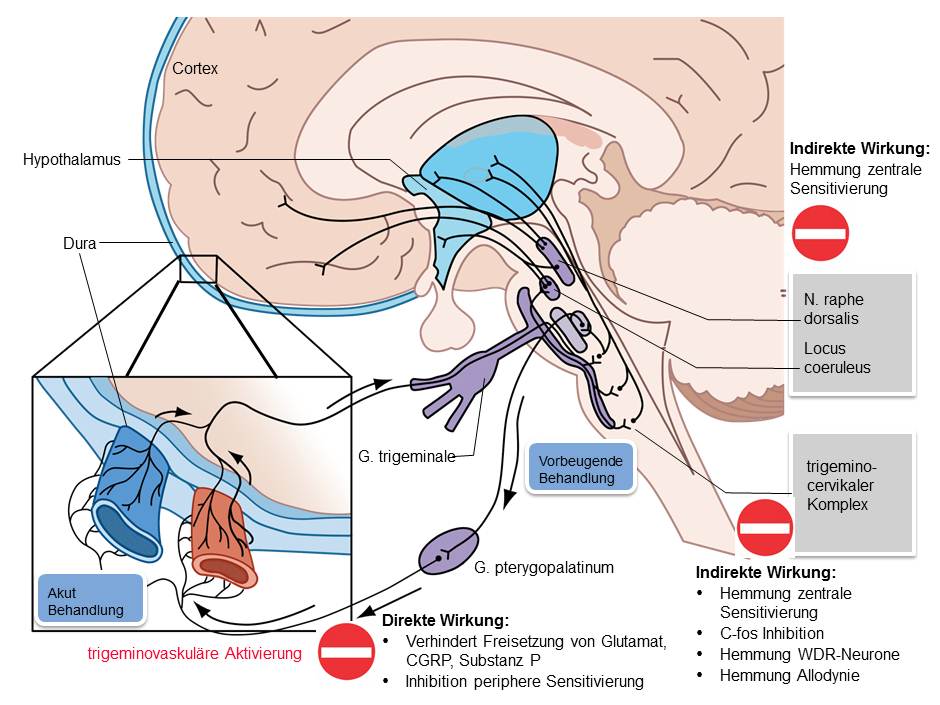
Mechanisms of action of botulinum toxin A (Botox) in the pathophysiology of migraine: Overview
The drug Botox® (botulinum toxin type A) received approval from the German Federal Institute for Drugs and Medical Devices (BfArM) on September 23, 2011, for the relief of symptoms of chronic migraine in adults who have responded inadequately to or cannot tolerate prophylactic migraine treatments. The approval was granted based on the Mutual Recognition Procedure in 14 European countries.
More on the scientific and clinical background:
Prophylaxis of chronic migraine with botulinum toxin
Since the second edition of the International Classification of Headache Disorders (ICHD-II 2004), chronic migraine been listed in the chapter on "Migraine Complications." While its prevalence is low compared to episodic migraine, the burden of suffering is considerable, as it affects all areas of life. Until now, no prophylactic medication specifically approved for chronic migraine has existed. There is only weak evidence that topiramate may be effective.
Following case studies describing the efficacy of botulinum toxin type A in migraine, initial attempts to demonstrate its effectiveness in the more common episodic migraine proved unsuccessful. Only through the PREEMPT clinical trial program with Botox® in the treatment of chronic migraine was it possible to demonstrate efficacy for this severely affected subpopulation. This provides, for the first time, an effective and well-tolerated treatment option for the prophylaxis of chronic migraine, which, however, must be integrated into a comprehensive therapeutic approach. Botox® was first approved in 2010 in England and the USA for the indication "prevention of headaches in adults with chronic migraine (≥15 headache days, ≥8 migraine days per month)." Approval in Germany was granted by the Federal Institute for Drugs and Medical Devices on September 23, 2011.


A small Botox treatment to reduce frown lines after I had Graves' disease had an amazing side effect: my severe headaches, which I used to get 3-4 times a week, have practically disappeared. In the last 3 months, I've only had 3 days of pain!
For me, it's a small miracle and a huge improvement in my quality of life!