


The question of whether botulinum toxin can also be used in cases of existing medication overuse headache (MOH) is causing confusion. The background and our conclusions from the Kiel Pain Clinic for practical application will therefore be explained below.
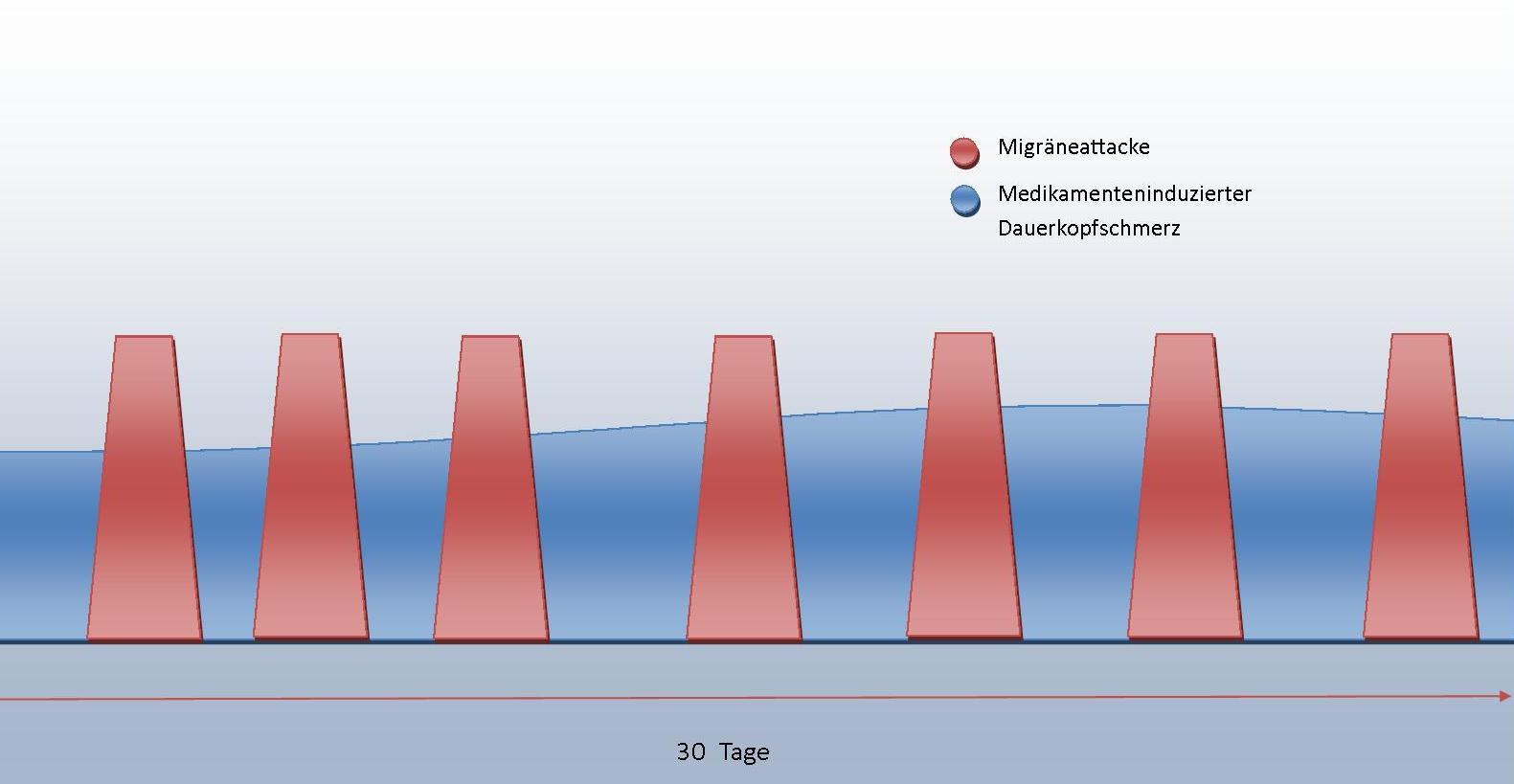
Headaches caused by medication overuse can mimic chronic migraines
According to its legal approval, botulinum toxin A (Botox) is authorized "for the relief of symptoms in adult patients who meet the criteria for chronic migraine (headaches on more than 15 days per month, of which at least 8 days are migraine) and who have responded inadequately to or are intolerant of prophylactic migraine medication." It is not authorized for other forms of headache.
In particular, its use for medication overuse headache is an off-label use outside of its approved indications. “Off-label use” refers to the use of a drug outside of its approved indications by national or European regulatory authorities.
Information on which diseases may be treated with a drug, and in what form, according to its marketing authorization, is described in the package leaflet (label). In principle, a drug may only be prescribed at the expense of statutory health insurance if it is used to treat diseases for which the manufacturer has received marketing authorization from the relevant authority.
Episodic migraine can be masked by an additional secondary headache, medication-overuse headache, due to medication overuse, thus creating the pseudo-image of primary chronic migraine. A similar picture can arise if chronic tension-type headache is also present. The package insert explicitly states: "The safety and efficacy for headache prophylaxis in patients with episodic migraine (headaches on fewer than 15 days per month) or chronic tension-type headaches have not been established. The safety and efficacy of Botox in patients with medication-induced headaches (secondary headaches) have not been studied.".
For approved use, medication overuse headache must either be ruled out or treated before botulinum toxin administration. Treating medication overuse headache with a medication break is a very effective form of therapy. It can usually be carried out very successfully within 10 to 14 days. This gives affected patients the chance to completely resolve chronic headaches with up to 30 headache days per month, leaving only the primary headache form, e.g., episodic migraine with 5 to 7 migraine days per month. This can then be treated efficiently and easily with behavioral modifications, acute medications, and, if necessary, a standard prophylactic medication. Treating this patient group directly with botulinum toxin without a medication break would, at best, result in a few fewer headache days per month; however, it would deprive these patients of the opportunity to overcome overuse and achieve a fundamental stabilization of their headache disorder. Regardless of these clear medical benefits for the patient, the treating physician would be subject to the risk of recourse by the health insurance company due to the off-label use if he cannot prove that medication overuse headache is not present or has been ruled out.
The use of botulinum toxin A (Botox) for existing or untreated medication-overuse headache is considered off-label use. Due to highly effective treatment options, this is unnecessary. Furthermore, leaving medication overuse untreated can lead to the headache condition becoming more chronic. If a patient suffers harm as a result of off-label use of the drug, the physician can be held liable for the consequences.


Leave a comment