


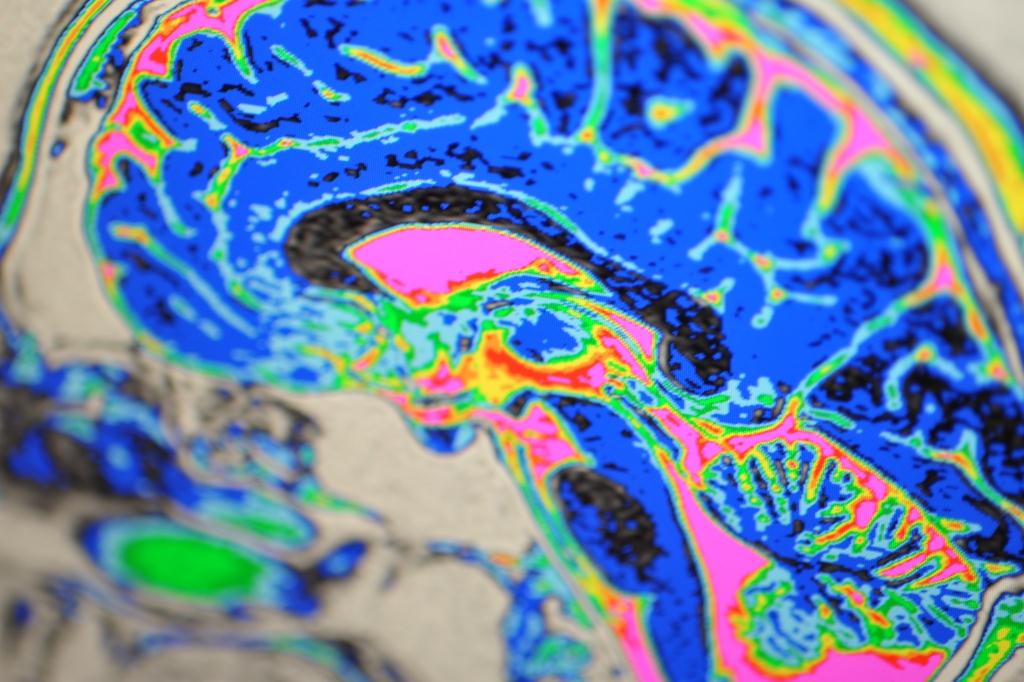
Migraines arise from altered signal transmission and disruption of the energy supply to nerve cells in the brain
A global collaboration of scientists, including a research team from the Kiel Pain Clinic , has identified four new gene loci whose alterations significantly increase the risk of developing migraines. These discoveries provide important new insights into the development of the most common forms of migraine. In the world's largest migraine study, the genes of over 5,000 migraine patients were examined and compared with those of 7,000 control subjects. The results will be published in the current issue of Nature Genetics on June 10, 2012 .
The researchers examined the genetic characteristics of more than 11,000 people. In total, they found six genes that increase the risk of developing the most common form of migraine, migraine without aura. Four of these genes were previously unknown and represent new discoveries. The other two confirmed previous findings.
The newly discovered findings confirm previous assumptions that a disruption in signal transmission in brain nerve cells is significant for the development of migraines. Knowing which functions genes control allows treatment to be directly targeted at these mechanisms. Two of the genes are relevant to the function of arteries and veins in the brain. The findings support the hypothesis that alterations in blood supply and a disruption in the transmission of nerve information play a crucial role in the development of migraines.
 This publication is the third in Nature Genetics from the same consortium on the genetics of the two most common forms of migraine. In total, the researchers have now sequenced seven new migraine genes: a DNA variant in migraine patients with aura, located PGCP and MTDH/AEG-1 PRDM16 , TRPM8 , and LRP1, MEF2D , TGFBR2 , PHACTR1, and ASTN2 have also now been sequenced. The new study also confirmed the association between TRPM8 and LRP1 with an increased risk of migraine.
Even though the individual extent of each gene's influence on migraine risk is relatively small, identifying genetic variants provides important insights into the molecular mechanisms that contribute to the development of migraines. Together with previous molecular biological research findings on rare familial forms of migraine, the newly discovered genes indicate that both specific vascular disorders and hyperexcitability of the central nervous system due to increased activity of the neurotransmitter glutamate contribute to the migraine development process.
“Studies of this kind can only be carried out through elaborate, complex, and international cooperation. This brings together the necessary large amount of data, the required expert knowledge, and the required resources. The newly identified genes open new doors to understanding how the widespread disease migraine develops,” stated Dr. Arn van den Maagdenberg, member of the International Headache and Genetics Consortium and one of the senior authors of the publication, together with Dr. Martin Dichgans and Dr. Aarno Palotie.
“Migraine is one of the most debilitating widespread diseases. The new data reveal important neurobiological mechanisms involved in its development. They help explain why affected individuals have an increased risk of migraine compared to healthy individuals. Furthermore, these findings improve the possibility of more targeted treatment interventions that address the development of migraines,” said Prof. Dr. Hartmut Göbel from the Migraine and Headache Center at the Kiel Pain Clinic, a member of the international Headache and Genetics Consortium and co-author of the study. To compile the data, clinical data and blood samples from affected patients and their family members were collected, analyzed, and classified over several years. In collaboration with the research group of Prof. Dr. Christian Kubisch from the University of Cologne/Ulm, and within the framework of an international cooperation with researchers from, among others, the Wellcome Trust Sanger Institute (Cambridge), Ludwig Maximilian University of Munich, and Leiden University Medical Center, the identification of genetic risk factors for migraine was made possible.
To identify the genetic variants that increase the risk of migraines, the scientists used a genome-wide association study (GWAS). They first compared the genomes of 2,000 migraine patients from the Netherlands and Germany with those of over 4,000 healthy volunteers. This allowed them to determine whether certain genetic variants were more common in one of the two groups and consequently significantly increased or decreased the risk of migraines. To confirm these results, the research team also examined the genome of another group consisting of over 2,500 patients and 2,500 healthy volunteers from Finland, Spain, the Netherlands, and Norway.
The statistical analysis, which combined the datasets from both studies, identified a total of six DNA variants on chromosomes 1, 2, 3, 6, 9, and 12 that are associated with an increased risk of developing migraine without aura. Interestingly, no association with migraine without aura could be found for the gene variant on chromosome 8, which the same research group had previously linked to migraine with aura. This suggests that the two forms of migraine have different underlying mechanisms.
The study was conducted by the International Headache and Genetics Consortium , a scientific collaboration of more than 40 global clinical and genetic research centers.
Details of the publication
Freilinger, T et al . (2012) Genome-wide association analysis identifies susceptibility loci for migraine without aura. Nature Genetics . Available online at doi: 10.1038/ng.2307
Participating centers
Nature Genetics homepage.
Regarding the clinical picture of migraine:
 Migraine is one of the most common chronic diseases in humans. The World Health Organization (WHO) ranks migraine among the most disabling diseases, even more so than, for example, diabetes or angina pectoris. In Germany, almost 18 million people are affected, with women being affected more than twice as often as men. Migraine often begins in childhood, most frequently between the ages of 8 and 25. Contrary to earlier assumptions, the attacks do not subside after menopause. Migraine symptoms typically begin to lessen around the age of 70.
Over the millennia, physicians have repeatedly developed new theories about what distinguishes migraine sufferers from those who are not affected. Today, it is known that the brains of migraine sufferers are more active, react more quickly, and are more sensitive to stimuli. Changes in the human genome increase the risk of this heightened excitability of nerve cells. This also explains why migraines tend to run in families.
The inherited increased risk of migraines does not, however, cause pain itself. Only specific triggers and unusual or prolonged stress cause a breakdown in the energy supply to nerve cells in people with a migraine predisposition. As a result, pain-inducing neurotransmitters are released. This leads to inflammation of the blood vessels in the meninges, which causes the throbbing pain. Movement and physical activity exacerbate the suffering. A strong hypersensitivity to smells, sounds, and light develops. Nausea, vomiting, and other gastrointestinal disturbances further exhaust the sufferers. Often, the only remaining option is to retreat into darkness and remain bedridden for days.
Migraine has many faces; a total of 22 different forms are distinguished. Ninety percent of sufferers experience migraine without aura, the most common and widespread form of migraine. This occurs without accompanying neurological symptoms. In approximately 10% of attacks, specific neurological symptoms can occur at the beginning of the headache, initiating the headache phase. This form is called migraine with aura. However, such neurological symptoms can persist throughout the course of the headache and, in rare cases, even remain permanently as a so-called migrainous infarction. The most common neurological symptoms are unilateral visual disturbances. For example, slowly spreading zigzag lines, streaks, or halos may appear in the field of vision. Tingling sensations in the hands, legs, or face may also occur. Patients may report dizziness, speech difficulties, or even paralysis and episodes of loss of consciousness. The period of these neurological disturbances is called "aura", named after the Greek goddess of the dawn Aurora and the Latin word aura for breath or shimmer.
Treating migraines requires a comprehensive behavioral approach. Migraine sufferers should maintain a consistent day-night rhythm and avoid abrupt and intense changes in stimuli. A regular, balanced, and carbohydrate-rich diet can stabilize the energy supply to nerve cells. Relaxation techniques prevent excessive nerve excitation. Regular endurance exercise is beneficial as a preventative measure. For frequent attacks, medication can be used for preventative treatment. This aims to reduce the number of headache days per month. For treating acute attacks, medications for nausea and pain, as well as specific migraine medications, are available.
Sources
WHO (World Health Organization) (2011) Atlas of headache disorders and resources in the world. WHO, Geneva.
Göbel H: Headaches; Springer-Verlag Heidelberg, 2012, 3rd edition.
Göbel H: Migraine; Springer-Verlag Heidelberg, 2012.
Contact details:
Prof. Dr. Hartmut Göbel
E-mail: hg@schmerzklinik.de
Tel. 0431-20099150


[…] Nature Genetics: Genome-wide association analysis identifies susceptibility loci for migraine without aura […]
I just read that new progress has been made in understanding the causes of migraines.
I've been a migraine patient for over fifty years, so I'm happy about every improvement.
Currently, I'm prescribed the prophylactic medication Metoprolol beta 95mg extended-release tablets by the headache clinic at Charité-Mitte.
At the moment, it seems that my migraine attacks have decreased in both frequency and intensity. However, June shows a fluctuation compared to May: 4 attacks in May and 6 in June.
In previous months, I had between 5 and 11 attacks per month, ranging in intensity from 2 to 3.
I hope that a truly targeted treatment for my migraines will soon be available.
Kind regards, Christa Hahn