


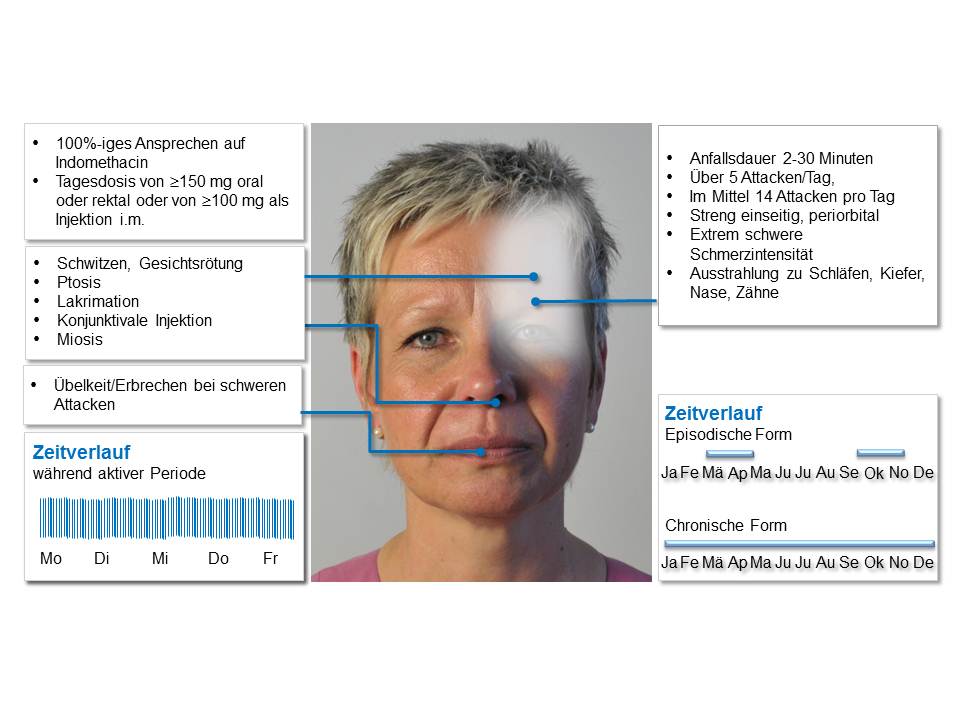
 Paroxysmal hemicrania manifests as headache attacks with the same pain characteristics and accompanying symptoms as cluster headaches. However, the attacks are shorter in duration, occur much more frequently, predominantly affect women, and respond reliably to indomethacin. Paroxysmal hemicrania can also occur secondarily as a symptom of an identifiable underlying cause. A thorough diagnostic workup is necessary to rule out symptomatic paroxysmal hemicrania, particularly in cases of atypical clinical presentation and poor response to indomethacin.
SUNCT syndrome is characterized by short-lived, unilateral pain attacks that are significantly shorter than those seen in other trigeminal autonomic cephalalgias. Typically, marked lacrimation and conjunctival injection occur ipsilateral to the pain. Some patients have been described who presented with both cluster headache and trigeminal neuralgia . These patients should receive both diagnoses. The importance of differentiation lies in the fact that both conditions require specific treatment to achieve pain relief.
Detailed information can be found in the electronic reprint on this topic.


Leave a comment