


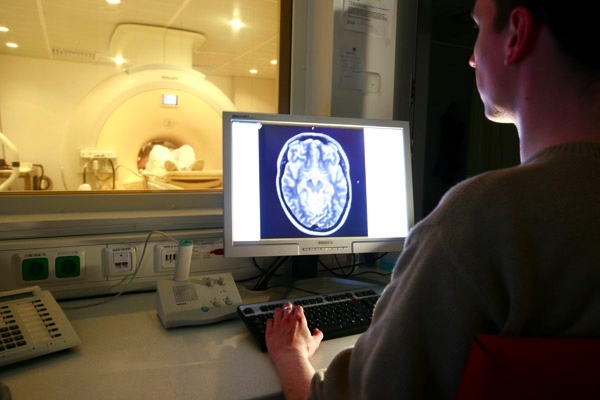

Using data from the longitudinal UK Biobank, which began in the pre-pandemic era, cerebral MRI findings were collected for the first time before and after COVID-19 in the same individuals and compared with a control group of non-infected individuals [1]. The results showed a decrease in gray matter in the orbitofrontal cortex and a reduction in total brain mass in those who had been infected with SARS-CoV-2 in the interim. Cognitive test results also deteriorated in these individuals over time. Whether these changes are reversible is currently unclear. Another study [2] showed an increased rate of de novo dementia after COVID-19 compared to other pneumonias.
Many studies have already shown COVID-19-associated abnormalities in brain structure. However, it remained unclear whether milder cases of SARS-CoV-2 infection could also lead to such changes. A study published in the renowned journal Nature [1], conducted as part of the large, longitudinal UK Biobank Imaging Study [2], was the first to examine cerebral MRI changes in SARS-CoV-2-infected individuals who already had a cerebral MRI scan before the pandemic. Since its inception in 2006, the UK Biobank Imaging Study has involved over 40,000 people (over 45 years of age) undergoing multimodal cerebral MRI scans at four centers, following standardized protocols. The study was initially paused due to the pandemic; starting in February 2021, participants were invited for further MRI scans. In the interim, many of them had recovered from a SARS-CoV-2 infection.
To investigate the potential impact of SARS-CoV-2 infection on brain structure, two scans (before and after COVID-19) were compared with those of participants who did not have COVID-19. The availability of imaging before infection minimized the likelihood that previously unknown risk factors or abnormalities would later be misinterpreted as COVID-related. Participants with incidental cerebral findings in the first scan were also excluded from the study. The groups were comprehensively matched, meaning there were no significant differences in age, sex, ethnicity, mean blood pressure, diabetes mellitus, weight/BMI, alcohol and nicotine consumption, or socioeconomic status (Townsend Deprivation Index).
Of 785 eligible individuals in the biobank (aged 51-81) who each underwent two cerebral MRI scans, 401 had contracted a SARS-CoV-2 infection between the two scans; 15 of these were hospitalized. The average interval between the infection diagnosis and the second scan was 141 days. The control group consisted of 384 individuals. The mean interval between the two brain scans was 3.2 ± 1.6 years in both groups.
The results revealed significant longitudinal effects and MRI changes in the group of individuals who had been infected with SARS-CoV-2 in the interim. These included a decrease in gray matter and a decrease in tissue contrast in the orbitofrontal cortex (the cerebral cortex in the anterior region above the eye sockets) and in the parahippocampal gyrus (part of the limbic system located in the temporal lobe). Tissue changes and damage were also observed in brain regions functionally associated with the primary olfactory cortex, as well as a greater decrease in total brain mass. Individuals who had been infected with SARS-CoV-2 also showed significantly more decline in cognitive performance (between the two scans) than non-infected individuals. These longitudinal group differences (in imaging and cognition) persisted even after excluding the 15 participants who were hospitalized due to COVID-19 from the statistics.
The pathomechanism of SARS-CoV-2-associated brain changes now requires further investigation. The researchers discuss the possibility of virus transmission via olfactory-neuronal pathways and inflammatory processes. The loss of sensory-olfactory input due to the loss of the sense of smell (anosmia) could also have indirectly caused structural changes, according to the study authors.
“The data from the UK Biobank show that there is a morphological correlate for the neurological post-COVID symptoms,” commented Prof. Dr. Peter Berlit, Secretary General of the DGN. “Whether the changes documented in the imaging are reversible over time or persist long-term in the sense of neurodegeneration now needs to be further investigated in follow-up studies.”
Another study [3] also describes COVID-19-associated functional cerebral changes. However, in this study, all of the more than 10,000 participants had severe SARS-CoV-2 pneumonia. Three percent developed new-onset dementia after more than 30 days. The risk of dementia after SARS-CoV-2 pneumonia was 30% higher in this study (OR 1.3) than after non-COVID-19-associated pneumonia. New-onset dementia was defined using primary diagnostic codes according to ICD-10-CM (F01.5, F02.8, F03.9, G30, G31, G32). Participants with documented pre-existing dementia symptoms or cognitive deficits were excluded. Comorbidities that can increase the risk of developing dementia were considered in the multivariate analysis (e.g., hypertension, drug, nicotine, and alcohol use, certain neurological and psychiatric disorders).
"The data show that the virus, although thankfully only in rare cases, can also lead to long-term changes in the brain. Against this background, vaccination offers protection not only against severe acute cases of infection, but also against long-term damage," the expert concluded.
literature
[1] Douaud G, Lee S, Alfaro-Almagro F et al. SARS-CoV-2 is associated with changes in brain structure in UK Biobank. Nature 2022 Mar 7. doi: 10.1038/s41586-022-04569-5. Online ahead of print.
[2] https://www.ukbiobank.ac.uk/explore-your-participation/contribute-further/imaging-study
[3] Qureshi AI, Baskett WI, Huang W et al. New Onset Dementia Among Survivors of Pneumonia Associated with Severe Acute Respiratory Syndrome Coronavirus 2 Infection. 2022 Infectious Diseases Society of America. https://europepmc.org/article/PMC/PMC8903511


Leave a comment