



Approximately 30% of pregnant women take the pain reliever ibuprofen during the first three months of pregnancy. Ibuprofen works by inhibiting prostaglandin synthesis. It has long been known that this can impair pregnancy and/or embryo-fetal development. Data from epidemiological studies show an increased risk of miscarriage and birth defects after the use of prostaglandin synthesis inhibitors in early pregnancy. The general recommendation is that ibuprofen should only be given during the first and second trimesters of pregnancy if absolutely medically necessary. At the same time, the dosage of ibuprofen should be kept as low as possible and the duration of treatment as short as possible. This applies both to women trying to conceive and to pregnant women during the first or second trimester. Ibuprofen is contraindicated during the third trimester of pregnancy because there is an increased risk of damage to the heart, lungs, and kidneys of the unborn child. In the mother, a prolongation of bleeding time and an inhibition of uterine contractions can also occur at the end of pregnancy.
A recent study investigated the potential long-term effects of ibuprofen administration on the daughters of pregnant women. In this laboratory study, ibuprofen led to a significant loss of female germ cells. Ibuprofen works by inhibiting the enzyme cyclooxygenase (COX). Cyclooxygenase is required for the production of prostaglandins, which are also necessary for the development of egg cells in the fetal ovary. The research team led by Séverine Mazaud-Guittot, University of Rennes, Inserm, EHESP, Institut de Recherche en Santé, Environnement et Travail, France, examined the effect of ibuprofen on the development of human egg cells in a highly controlled design. The human ovaries were obtained from 185 fetuses resulting from legal abortions performed between the 7th and 12th weeks of pregnancy. The ovarian tissue was cultured in the laboratory, and the nutrient solution was treated with ibuprofen at varying concentrations over different periods. In addition, the concentration of ibuprofen in the umbilical cord blood was measured in women who had taken ibuprofen 2-4 hours before the abortion.
For the first time, the research team was able to confirm that ibuprofen can directly cross the placental barrier. The ibuprofen concentration in umbilical cord blood showed the same values as in humans who used a corresponding dose of ibuprofen for therapeutic purposes. Subsequently, the ovarian tissue of fetuses that had not previously been exposed to ibuprofen via their mothers was exposed to ibuprofen in various doses. A significantly reduced cell growth and a dramatic decrease in the number of eggs were observed. After the ibuprofen exposure was discontinued, this decline was irreversible. The germ cells from which the female eggs develop either died or ceased to multiply in their usual manner.
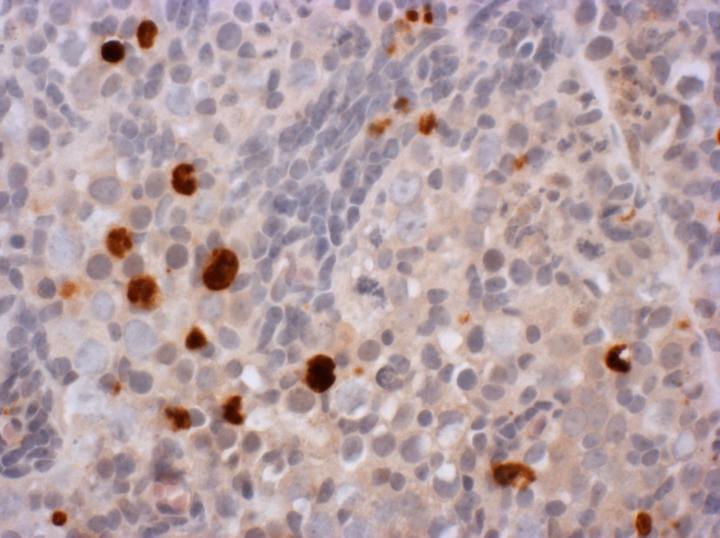
Ovarian tissue after seven days of ibuprofen exposure. The large brown cells are dying germ cells; the small brown cells also die. Source: Severine Mazaud-GuiJot, INSERM
The authors derive from the data the concern that taking ibuprofen during early pregnancy could have negative long-term effects on girls' later fertility. Newborn girls are born with a finite number of follicles in their ovaries. These determine their later fertility in adulthood. A reduced number can lead to a shortened reproductive window, earlier menopause, or even infertility. All of these can manifest decades later in life.
With short-term use, it is possible that the effect of ibuprofen on follicle development may recover. However, the study showed that contact with ibuprofen for a period of 2-7 days can already lead to a dramatic reduction in germ cells in the first trimester of pregnancy, and no complete recovery of the damage was observed. This could mean that prolonged exposure to ibuprofen during the fetal period can lead to lasting negative effects on fertility.
This study was the first to investigate the effect of ibuprofen on the ovarian tissue of female fetuses. It was the first study to confirm that ibuprofen can cross the placenta during the first trimester of pregnancy. The research team carefully controlled the effects of ibuprofen on cultured ovarian tissue in the laboratory. A portion of tissue from each fetus was exposed to ibuprofen, while another portion served as a control without ibuprofen exposure. The study has limitations; the effect was investigated in a laboratory setting, and long-term effects were not analyzed.
As the findings on the negative long-term effects of paracetamol on the unborn child already show, this study also demonstrates that everyday painkillers such as paracetamol and ibuprofen can have lasting negative effects when taken during pregnancy. These effects could impact later fertility decades after birth, even well into the perimenopause and menopause. The findings underscore once again the urgent need for education about pain management during pregnancy, given the high number of pregnant women who take painkillers. Painkillers during pregnancy should only be taken when absolutely necessary, and even then, only in the lowest possible dose for the shortest possible time. It should be borne in mind that painkillers like ibuprofen or paracetamol have only a weak pain-relieving effect. They are unsuitable for severe pain. Especially during pregnancy, painkillers should not be taken without medical advice to weigh the potential risks against the expected benefit. It should be taken into particular consideration that there are numerous non-drug treatment options for both the prevention and acute therapy of pain.
Source:
Leverrier-Penna, S; Mitchell, Rod; Becker, Esther BE; Lecante, L; Ben Maamar, Millissia; Homer, N; Lavoué, Vincent; Kristensen, David M.; Dejucq-Rainsford, Nathalie; Jegou, B; Mazaud-guittot, Séverine / Ibuprofen is deleterious for the development of first trimester human fetal ovary ex vivo. In: Human Reproduction, February 2, 2018.
EurekAlert system: European Society of Human Reproduction and Embryology
Ibuprofen in the first three months of pregnancy may harm future fertility of baby girls
FAZ: Does ibuprofen make daughters infertile?
German Medical Journal: Ibuprofen use in early pregnancy could also make daughters infertile


Leave a comment