

Many people are frightened by the current potential risk of infection with the new coronavirus. There is public debate about whether to wear a face mask. While it doesn't protect the wearer from infection, it can protect others from potential infection. If everyone wore such a face covering, the likelihood of infection would also decrease.
The video above clearly shows how the air turbulence from exhaling directly impacts those around us and increases the likelihood of infection when inhaling. A simple face mask can reduce this probability. The exhaled droplets in the breath of infected individuals contain viruses from the lungs and throat. If these enter the breath of another person, infection is possible. A face mask, worn out of respect for others, could reduce this risk. However, the problem is that so-called surgical masks are not readily available to the general public.
Migraine sufferers, in particular, often worry about how they can help others and themselves. Furthermore, the anxiety level of migraine sufferers is up to ten times higher than that of people without migraines. What can be done? "It is important that we learn from this pandemic that we also need a certain degree of sovereignty here, or at least a pillar of domestic production," said Chancellor Dr. Angela Merkel today, April 6, 2020, at her press conference in Berlin.
Let's do it. We'll help ourselves. If surgical face masks aren't available, here are a few tips on how to make your own "homemade" face covering despite shortages. Here are some examples:


An alternative is a double-layered paper tissue. This can also be secured to the face with adhesive strips. Probably better than nothing. And you can change it at any time. These materials should be available in every household. It should be noted: These are not medical respirators; they do not meet any FFP standard and are not certified.
Virologist Prof. Dr. Christian Drosten on the effectiveness of face masks. Droplets and airborne transmission are the primary routes of infection.
The good news: the possibility of infection via surfaces is negligible in everyday life.
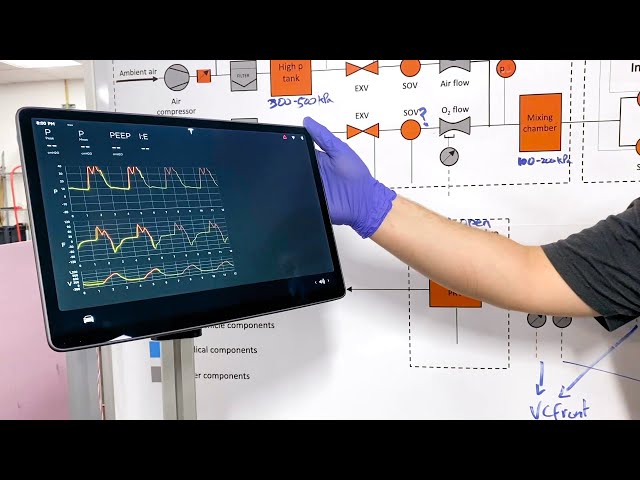
The concept of DIY has also been embraced by Tesla founder Elon Musk. He's building ventilators from Model 3 components. It's not that difficult. Imagine it as a kind of digitized bellows. His technicians just shouldn't constantly touch their face masks with their hands. That could promote infections.
And another tip to ease your anxiety: If you're worried about running out of toilet paper, there's a much better option. Online retailers, such as Amazon and others, sell handheld bidet sprayers. They cost less than €12. These can be attached to any standard shower hose. If your toilet doesn't have a suitable water connection, you can also attach the spray head to your bathtub's shower hose and sit on the edge of the tub to clean yourself. There you have it – your own personal bidet. Cleaning is much more effective than with toilet paper, and you'll experience a wonderfully fresh feeling. It might even make you think about why you constantly wash the cleanest part of your body, your face, with all sorts of things, only to wipe it with dry paper. Here are instructions for making your own:


Leave a comment