

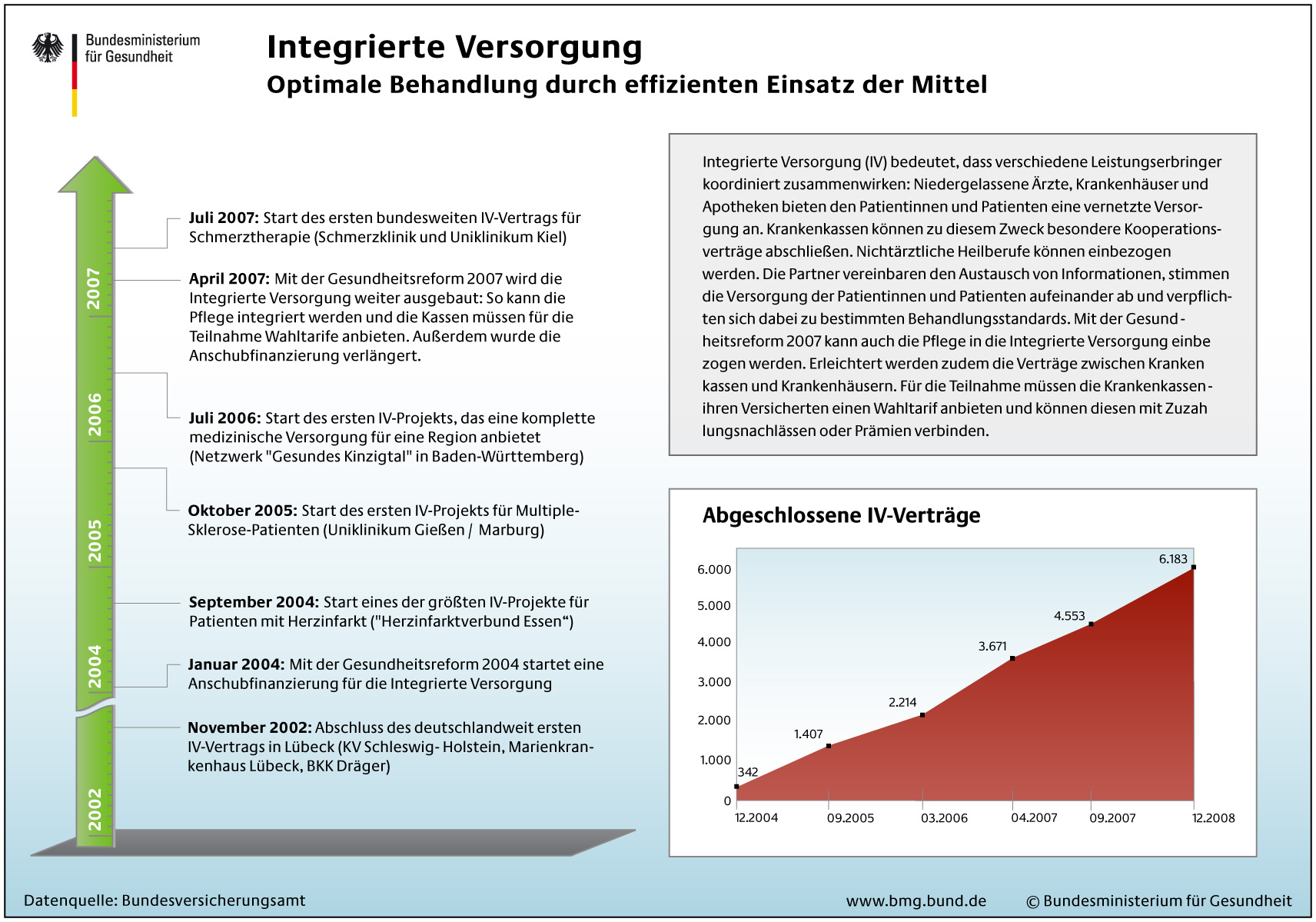

 Patients insured with BKK health insurance who suffer from migraines, headaches, and neuralgia can now receive even better medical care. The BKK Contractual Working Group NORD (BKK-VAG NORD) and the Kiel Pain Clinic have established the contractual framework for coordinated care for their patients.
A total of 48 company health insurance funds , united in the BKK Regional Association NORTHWEST, the Contractual Working Group NORTH , and other company health insurance funds from across Germany that have joined the agreement, have been offering this treatment program to their insured members nationwide since April 1, 2012. The network focuses on the
- optimized treatment based on current scientific knowledge
- Cross-sectoral specialized treatment pathways
- organized treatment chain
- ongoing monitoring of progress and success
Care within the nationwide migraine and headache network
The treatment network is geared towards the specialized care of severely affected patients with chronic headache disorders. It encompasses all serious and complex primary and secondary headache disorders, as well as head and facial neuralgia. It focuses on additional serious and complex comorbidities, such as medication overuse, medication intolerances, psychological and social complications, and organ damage.
A nationwide network of outpatient and inpatient pain therapists in private practices and hospitals works hand in hand to provide optimal pain relief across disciplines and sectors using state-of-the-art methods. For therapy-resistant conditions, highly intensive, supraregional, and interdisciplinary inpatient treatment is available at the Kiel Pain Clinic. This concept offers, for the first time, nationwide coordinated treatment without the limitations of specialty boundaries or bureaucratic reimbursement systems.
More details Information about the treatment process can be found here.
The integrated networked supply consists of three phases:
- Phase I: Specialized diagnostics, selection of cross-sectoral treatment pathways, treatment on site
- Phase II: Inpatient, cross-sectoral neurological and behavioral medicine treatment at the Kiel Pain Clinic
- Phase III: Outpatient monitoring of progress and success, cross-sectoral monitoring of the therapy process on site
Phase I
- Standardized medical history and evaluation of external findings
- Pain analysis
- Clarification of the diagnosis
- Development of a therapy plan
- Upon fulfillment of the admission criteria, registration for inpatient treatment within the framework of Phase II
- An admissions conference, together with the referring physician, decides on admission

Phase II
In this section, the cross-sectoral neurological-behavioral medicine treatment takes place on an inpatient basis at the Kiel Pain Clinic, with the integrated therapy procedures being used simultaneously in a coordinated manner.
- Refinement, updating and supplementation of neurological and behavioral medicine diagnostics (multiprofessional individual case diagnostics)
- Analysis of the biological, psychosocial and economic conditions of chronic pain.
- Reduction of pain-induced disability.
- Improvement of future performance capacity.
- Specific diagnosis and treatment of psychological and social illness conditions and their effects on the experience of illness.
- Advice on individual pain disorders, mechanisms of development, and drug-based and non-drug-based treatment methods for self-control and self-treatment of pain disorders.
- Advice on issues of remaining work capacity and possible initiation of vocational rehabilitation measures.
- Offering a multidimensional inpatient treatment concept that combines drug and non-drug strategies, including
- Identifying and avoiding trigger and amplification mechanisms
- Medication break/withdrawal
- Dietary change
- Relaxation techniques, e.g. progressive muscle relaxation
- Biofeedback methods
- Stress management training
- Operant and cognitive procedures
- Self-confidence training
- physiotherapy
- Physical therapy methods
- Stimulation procedures
- Drug-based pain prophylaxis
- Drug therapy for attacks, etc.
- Offering individual and group therapy, behavioral medicine treatment concepts for coping with acute and chronic pain conditions
- Everyday behavioral medicine and sociotherapeutic measures for reintegration into family and work
- Development of follow-up and long-term care concepts hand in hand with the pre- and post-treatment physician for outpatient follow-up treatment
Phase III
- Standardized assessment of therapy efficacy at three-month intervals
- If necessary, short-term inpatient readmission
- Patient seminars on coping with illness
- Cross-sector training courses for participating doctors, psychologists, etc.
- Online consultation, digital documentation with the migraine app, etc.
How can I participate?
First, make an appointment with a local network partner. You can find pain specialists who cooperate within the nationwide headache treatment network on the headache network partner map. For a quick search, enter your postal code and city (e.g., 24149 Kiel) in the radius search. All addresses within the selected radius of the entered location will be displayed. The individual addresses are also listed below the map, where you can find all the relevant information clearly. You can also find local pain specialists via the migraine app .
Whether the treatment program is suitable for you and your condition will be decided by your attending physician together with you on-site, based on the examination findings. Please discuss this with them. They will help you make the decision. In cases of doubt, your doctor can clarify the admission decision via the network management hotline: +49 431 20099-400.
Should you be unable to secure a timely appointment at your local clinic, an outpatient consultation be arranged at the headache center of the Kiel Pain Clinic. For advice and to schedule an appointment, please call 0431-20099-400.
The individual steps
Further information on the treatment process
Further individual information regarding inpatient admission can be found here by email or can be obtained via the central management telephone. Please be so kind as to familiarize yourself with the general formalities beforehand on our website. In this internet age, we no longer send brochures and documents by post.
Phone: 0431-20099120
Fax: 0431-20099129
iv-netz@schmerzklinik.de
Outpatient pre- and post-treatment
Phone: 0431-20099400
Fax: 0431-20099409
praxis@schmerzklinik.de
What you should bring to your appointment
The supply needs
The treatment of headaches exemplifies how the sectorally fragmented healthcare system, based on collective bargaining agreements, can itself contribute to illnesses becoming chronic and pain persisting indefinitely. Traditional standard care for headache patients takes place in segregated sectors of the healthcare system. Many sufferers with chronic headaches resort to self-treatment outside the professional system due to its perceived lack of effectiveness. They seek information about various treatment options for migraines and headaches from friends, acquaintances, the popular press, the internet, and pharmacies. Dissatisfied with medical treatment, they often abandon professional therapy and, disappointed, turn to alternative methods. Over months and years, the headache condition becomes even more chronic, and serious organ complications, often resulting in severely debilitating psychological consequences, lead patients back to expensive medical treatment.
This results in very high direct and indirect costs. The individual consequences are severe. High follow-up costs also arise from the treatment of late complications such as mental illnesses, kidney failure, liver damage, gastrointestinal ulcers, and damage to the cardiovascular system.
All the knowledge developed nationally and internationally for the treatment of migraines, headaches, and chronic pain is made directly available to patients through integrated care within the standard healthcare system. Collaboration between innovative health insurance companies and specialists has enabled significant advances in care nationwide, extending beyond standard services. These advances will be maintained and expanded.
The Kiel Pain Clinic
To ensure sustainable care for all patients, the center was included in the Schleswig-Holstein state hospital plan at the end of 2013. In addition, according to a service agreement pursuant to Sections 108 No. 3 and 109 of the German Social Code, Book V (SGB V), the center provides acute inpatient treatment (Section 39 Paragraph 1 SGB V) for insured persons of all health insurance funds residing outside of Schleswig-Holstein for the following indications: chronic pain due to diseases of the central, peripheral, and autonomic nervous systems, including the muscles, within the framework of neurological-behavioral medicine treatment procedures.