


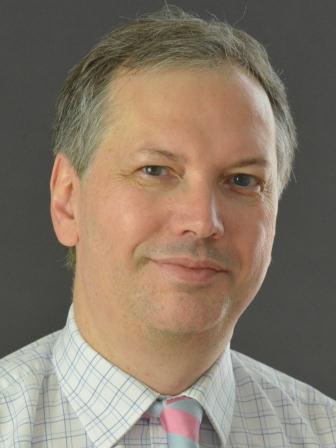
Prof. Hartmut Göbel
Schleswig-Holstein and Hamburg are at the bottom of the list in terms of access to pain therapists
In Schleswig-Holstein and Hamburg, around 40 percent of all patients with chronic pain are not receiving medical treatment. And only a very small number are being treated by trained pain therapists. This is the result of a recent representative survey conducted by the polling institute forsa among 1,822 pain patients across Germany, commissioned by the initiative "Ways Out of Pain".
When asked whether their treating physician holds the additional qualification of "pain therapist," 80 percent answered "no." With just two percent, Schleswig-Holstein and Hamburg have the lowest percentage of patients in Germany treated by a pain therapist.
The results confirm scientific findings on the healthcare situation in Germany: A large proportion of patients are under- or inappropriately treated. In some cases, they are treated incorrectly for years because the necessary expertise for the complex condition of chronic pain is lacking. "Physicians need better training and easier access to continuing education opportunities to be able to treat the multifaceted condition of chronic pain. To achieve this, pain therapy must be defined as a mandatory component of medical studies and as a separate specialty," says Professor Dr. Rolf-Detlef Treede, former president of the German Society for the Study of Pain (DGSS) and professor of neurophysiology at the Center for Biomedicine and Medical Technology Mannheim.
In an interview*, Prof. Hartmut Göbel answers questions about the supply situation from Oliver Hamel, Kieler Nachrichten, editor for politics, economics and social affairs:
Twelve million Germans suffer from chronic pain. Nearly 40 percent of them are not receiving medical treatment. Why is that?
Many have given up. Their suffering has worn them down, made them withdrawn and powerless, and they suffer silently and alone. Pain makes one quiet, sad, and lonely; it attacks the very core of one's being. The hope that the pain will ever lessen fades. The massive impact of the pain on family, relationships, career, and social connections leads to a sense of hopelessness and abandonment. In the end, despair, hopelessness, and resignation often prevail. They no longer go out; they break down. Only serious complications of the chronic pain condition lead them back to treatment, often only when it is almost too late.
What's going wrong?
Chronic pain is the number one widespread health problem, a major public health concern. Science and medicine have made significant progress in recent years in the effective treatment of chronic pain. The main obstacles preventing this knowledge from reaching those affected are a lack of organization and coordination within the healthcare system. Pain therapy must be planned across disciplinary boundaries and sectors of traditional structures. Stereotypical thinking and narrow-minded care planning would only perpetuate the pain illiteracy of the past.
To what extent does the problem lie with the doctors?
Sole specialization can lead to one-dimensional thinking, with the focus becoming too rigidly on details. As a result, the cause of the pain can be sought as if through a keyhole. If "the one" cause cannot be found—that is, if the pain cannot be explained or resolved with quick measures—further coordination of treatment is necessary. At this point, it should be recognized that pain is no longer a symptom, but an independent condition that requires coordinated and interdisciplinary treatment.
Do we need more universal doctors to treat pain?
Improved initial, advanced, and continuing education are essential keys to more effective pain therapy in the future. General practitioners possess extensive expertise and knowledge of disease progression. They play a crucial role in coordinating care, but they need targeted points of contact for severely affected individuals to access multimodal pain therapy. This refers to treatment that integrates all current therapeutic approaches simultaneously. Core components include specialized pain management treatments from multiple disciplines, including psychological and physiotherapeutic treatments, as well as intensive information and education. The principle is similar to patching a bicycle tire. If it has five punctures, you have to find and fix them all at once. If you only patch one, the tire will be flat again the next day. Many patients have to wait months for such modern outpatient treatments. Severely affected individuals who require specialized inpatient treatment often have to fight for care due to a lack of structures and coordination, and frequently lack the strength to do so.
Can people suffering from pain only be helped through a combination of measures?
Pain doesn't adhere to our templates, categories, and healthcare system sectors. Complex biochemical, physiological, psychological, and social interrelationships lie behind chronic pain. An initial triggering pain stimulus and its sole resolution are usually no longer relevant for the maintenance and chronification of pain in the chronic stage. In these cases, a comprehensive, interdisciplinary approach is necessary to effectively manage the pain process.
How has pain changed from your clinical perspective?
We are observing more devastating and severe illnesses, especially among young people. In the area of headaches, for example, we are seeing severe chronic migraine disorders in adolescents, with up to 30 days of pain per month. The pain leads to months of absence from school, and vocational training and university studies are often abandoned. Pain is occurring earlier in life today and with more complications.
How can this alarming development be explained?
Our societal changes are fundamental. Young people today are undeniably under greater strain. This is evident in their professional lives, due to increased demands, and in their private lives, due to less supportive environments. Family ties are weaker and less stable: more and more people have to bear more and more burdens alone. Chronic pain is more common among those with lower incomes and those who are socially disadvantaged. Furthermore, the tolerance for sharing in the illness of others has declined.
Which path should those affected take?
My advice is: Be your own advocate! Get a clear diagnosis. Make an appointment with a pain specialist. Be open to the complex interplay of factors involved in chronic pain and to multimodal treatment. Take initiative and don't remain passive. Act proactively, get involved, and don't just wait to be treated. Find or start a support group. Gather information and knowledge.
*An abridged version of the interview appeared
on July 15, 2013 in the Kieler Nachrichten, page 3.
Addresses and information on specialized pain therapy and palliative medicine in Schleswig-Holstein can be found at http://www.schmerztherapie-sh.de/




Interesting article! Unfortunately, the waiting times for an appointment with a pain therapist in North Rhine-Westphalia are 10 – 12 months. It's difficult not to lose courage.