


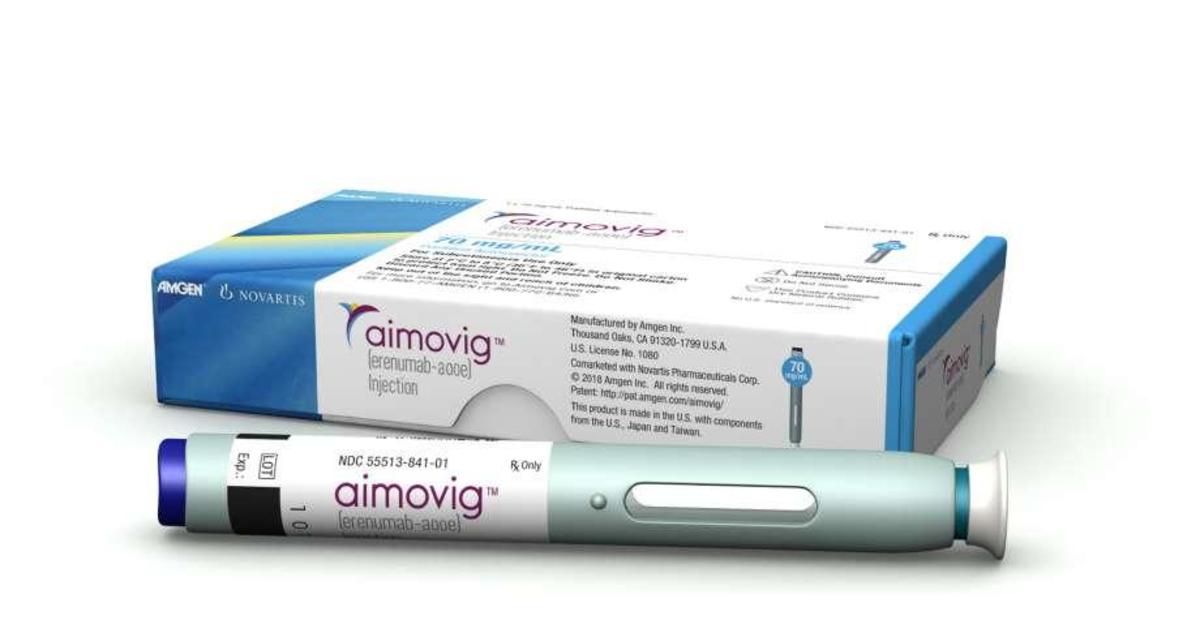
17.5.2018. The US Food and Drug Administration (FDA) approved Aimovig (Erenumab-Aooe) for the preventive treatment of migraines in adults on May 17, 2018. The treatment is carried out once a month by self -injection of the drug. Aimovig is the first preventive migraine medication permitted by the FDA for a new class of drugs to prevent migraines. They work by inhibiting the activity of calcitonin gene-related peptides (CGRP). The molecule is involved in the development of migraine attacks. "Aimovig provides migraine patients a new option to reduce the number of days with migraines per month. We need new treatment options for this painful and often hinder disease," said Erik Bastings, department director for neurological products from the US Food and Drug Administration.
The migraines occur in over 45 different sub -forms. The most common form is the migraine without aura. The headache has a duration of 4-72 hours. The headache character is pulsating and throbbing. Physical activity increases the pain so that the patients have to comply with bed rest. The pain attacks are accompanied by nausea and vomiting, as well as noise and light supervisivity. In approx. 10-30% of the patients, neurological accompanying symptoms, so-called auras, can be found before the headache phase. Visual disturbances with zigzag lines, which gradually spread out in the field of vision and disturb vision, occur most frequently. Other symptoms include word findings, tingling sensations, paralysis and consciousness disorders. Complications of the migraines are, among other things, the migrainous stroke or triggered epileptic seizures triggered by migraine attack. Migraines occur about three times more often in women than in men. About 10-14% of the population are affected within one year. About 1-2 % of the population suffers from chronic migraines. Headache attacks occur on more than 15 days a month.
The effectiveness of Aimovig for the preventive treatment of migraines was examined in 3 clinical studies. The first study included 955 participants and analyzed the effect of the drug in the therapy of preventing the episodic migraines and compared the effect of Aimovig to that of an active ingredient medicine (placebo). For a period of 6 months, patients who were treated with Aimovig, average 1-2 fewer migraine days per month compared to the patients treated with placebo. In a second study, 577 patients with episodic migraines were examined and the effectiveness of Aimovig and placebo analyzed. In a period of over 3 months, the patients treated with Aimovig showed one day less with migraines compared to the patients treated with placebo. In a third study, 667 patients with chronic migraines were examined and the effect of Aimovig compared to that of placebo. In this study, which was over 3 months, the patients treated with Aimovig showed 2.5 fewer days with migraines per month compared to the patients who received placebo. The most frequently observed side effects were pain at the injection site, infections of the upper respiratory tract and nausea.
“The new drug opens up a new era in the treatment of migraines. Admission is good news for affected patients suffering from the severe forms of this headache. It is the first medicine that has been specifically developed for the prevention of episodic and chronic migraines. Migraine pain is inhibited. Side effects of the previous migraine prevention means such as weight gain, mood changes, fatigue, drive reduction or drowsiness do not occur. In contrast to the previous medication, which are often discontinued after a short time due to such side effects, the treated patients remain sustainable with this therapy principle due to the tolerance and effectiveness. The data available so far show that one should not assume that the new immunotherapy ends the migraines and you can live as you want. On average, the headache days are reduced by about 1-3 days a month. The effectiveness is similar to the previous preventive medication. Special advantages are the quick occurrence, the tolerance and the response of patients who have no effect through other treatment. ” Comment Prof. Dr.
The new drug should be available in the United States within the next week. So far, the new medicine has only been examined in relatively short periods of time. There were side effects that were not more common than those of a placebo treatment. However, possible long -term side effects in the application of the drug in the migraines running for years and decades are open.
About 2% of the population suffers from chronic migraines worldwide. Migraines are classified by the World Health Organization as the third most common illness worldwide and is one of the most frequently occurring folklords. Headaches are 3 of the most difficult diseases of humans. The previously available preventive medication have not been specially developed for migraine treatment. The preventive effect of this medicine has been recognized as an ancillary aspect and its effectiveness was then examined in clinical studies. Their effect is limited, and at the same time numerous undesirable side effects occur. As a result, more than 80% of the patients treated drop the respective medicine after 1 year either due to a lack of effectiveness or due to side effects. Over the years, the available medication will be tried or combined one by one. Some patients find the side effects of the drugs available so far than the migraines themselves. Due to the non -foreseen of attacks, many people affected cannot make any plans or make obligations and appointments. Vocational activities are also not possible. Migraines are very likely to go hand in hand with psychological complications such as anxiety diseases, depression and personality changes. The risk of high blood pressure, heart attack and stroke is also significantly increased. Migraine attacks can already occur in severe forms in children. The latest studies show that the frequency of migraines in childhood has increased significantly in recent decades.
Monthly therapy costs in the United States are said to be around $570. The new drug is expected to be available in Europe in the second half of the year. The exact approval text and the definition for which patients the new drug will be reimbursed by health insurance companies are not yet known.
The new class of drugs is based on research efforts of over 30 years. In the 1980s it was discovered that CGRP played an important role in migraines. CGRP is a nerve messenger that is important when the signal transmission in the nervous system and also plays an important role in vascular control, in particular the vascular expansion. CGRP antibodies block the effect and can thus prevent the mechanisms of developing the migraine attack. The partial blocking of CGRP can prevent migraine attacks without disturbing the normal processes in the nervous system. The direct development of medicinal products with the aim of blocking CGRP was initially unsuccessful because it did not show sufficient tolerance in the long -term course. As a result, antibodies were therefore developed that act against the cell surface of the CGRP molecule and inhibit the function of CGRP. The half -life of the antibodies is more than 4 weeks. Therefore, treatment can be carried out every month and the effect of the drug can be maintained in the long term. It is a form of immunotherapy in the sense of a passive vaccination by providing the antibodies from the outside. Since the antibodies are not formed in the body themselves, they must be given again at a distance of 4 weeks. They are also in progress in which the drug is given every 3 months by an infusion in the doctor's office.
Even if the new drug opens up new options for those affected, it should not be expected that the migraine problem will be solved and that you can live as you want. Knowledge, information, behavior adjustment and regular daily planning are crucial for the prevention and treatment of migraines. Migraine is a complex disease that requires a comprehensive treatment concept, similar to the treatment of diabetes, high blood pressure or asthma. Treatment with medication only plays a partial role. The analysis of the study results shows that the new drug class does not have a sufficient effect in around 50% of the treated patients. In the other patients, the number of migraine days per month is reduced by approx. 1-3 days. A complex treatment concept that includes behavior, knowledge, life adjustment, acute therapy and drug therapy is therefore required.
Summary of the EMA recommendation on erenumab
US product information




Hello. I had 10-14 migraines a month. I went to the pain ward on September 16, 2024 for other ailments and haven't had an attack since then. A seizure developed on the same day I was injected with the 140 mg starch and it went away suddenly!!!
Many thanks to research and development. I have a new quality of life.
I found out about this new medication for the first time today. It's like a miracle. I've been suffering from migraines since I was a child. I'm now
62 years old. I'm immediately in favor of the new migraine medication (aimovig). I would like to thank the research team and everyone involved very much . Karola Hötger Hegemann
It would be a blessing for me and everyone affected.
I would like to thank the researchers.
Bärbel Paul
I'm curious what my neurologist has to say about this
I'm curious to see how our health insurance companies will react, reimbursement of costs, requirements, etc.
In any case, there's a glimmer of hope in the pain sky again and we can now warmly thank the entire research team and everyone involved.
I personally will confront my neurologist about it, Olaf Biewald.