



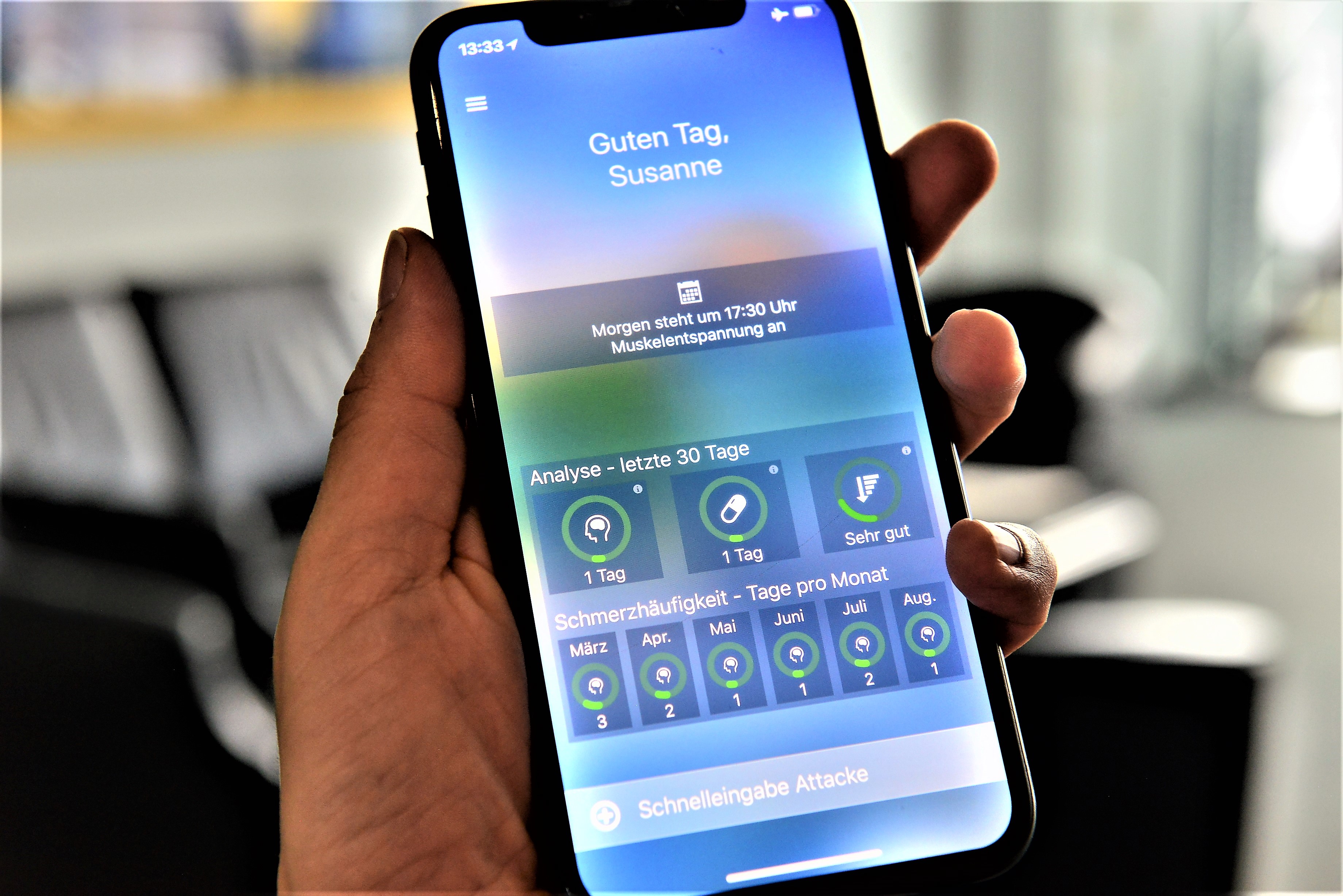
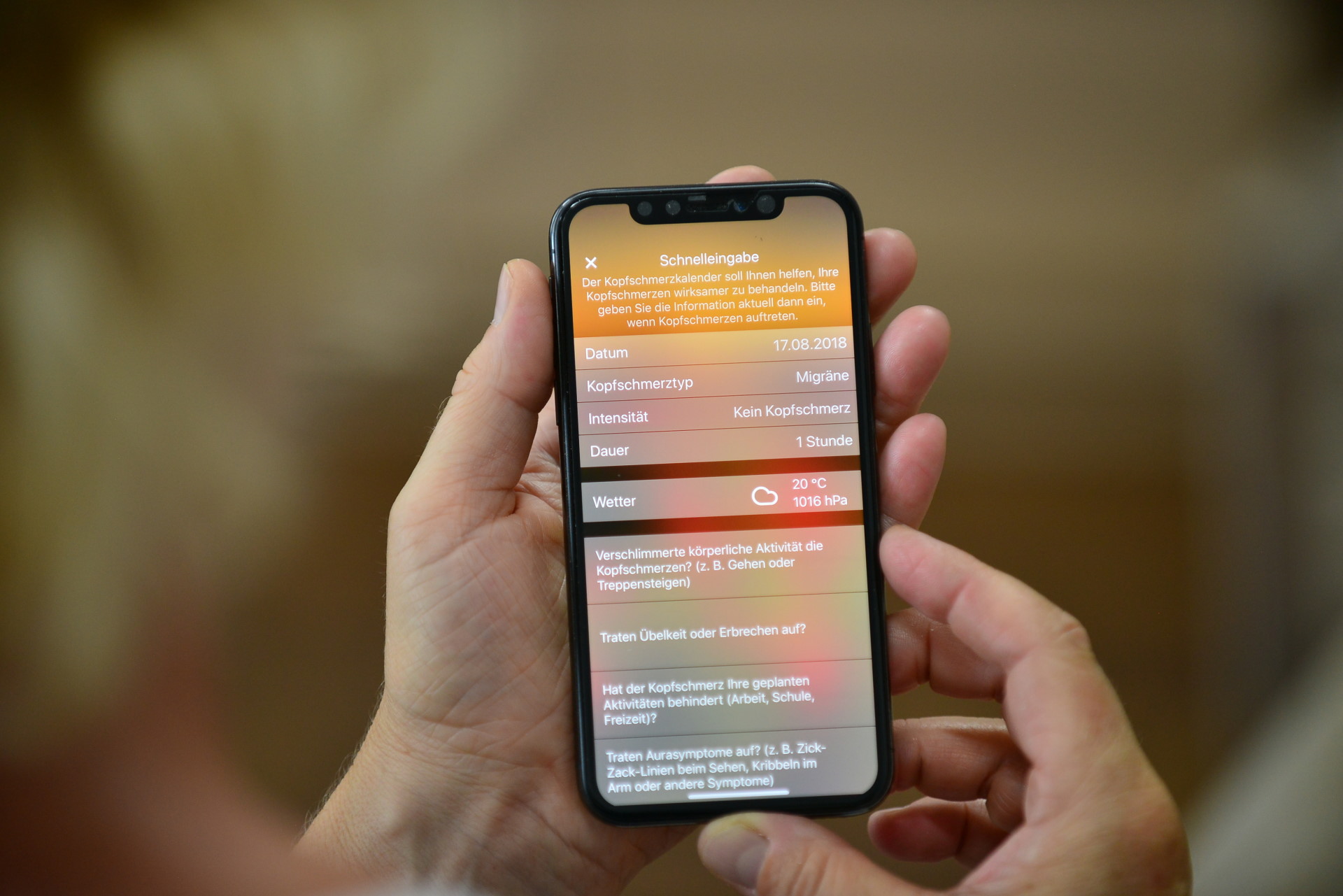
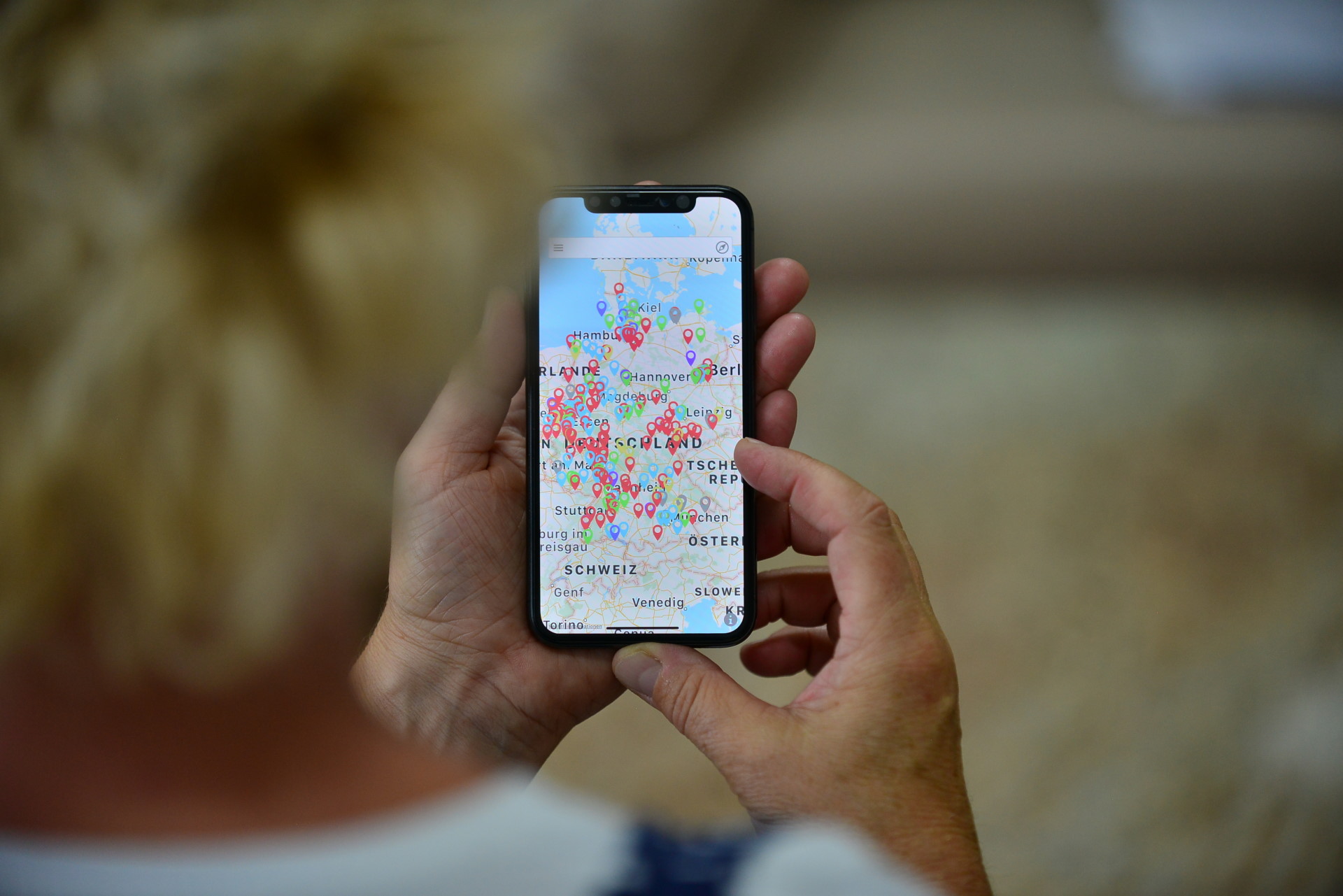
Kiel, January 16, 2019. The journal "Der Schmerz" (Pain) published today the first scientific analysis of the treatment behavior of migraine and headache patients using digital therapy support with a migraine app. This is the first scientific publication in Germany on the use of a digital application for migraine and headaches. The data show that digital monitoring of progress and success is relevant and established for physicians' treatment decisions in practice. This comprehensive study provides the first empirical evidence that the health behavior of migraine and headache patients is significantly improved by an app. Furthermore, it also increases treatment adherence and effectiveness through self-monitoring, knowledge, training, and the development of patients' skills. Digital therapy support is correlated with a significant reduction in headache days and medication intake per month. Complications such as medication overuse headache can be reduced. This has positive effects on quality of life, productivity, and overall societal costs.
background
Tension-type headaches and migraines rank second and third among the most common human illnesses worldwide, after dental caries. The widespread adoption of smartphones enables the use of specific software applications ("apps") for digital therapy support. This study aims to investigate the use of the "migraine app" for iOS and Android in the practical care of migraine and headache patients in a large sample.
methodology
To analyze the app's use in therapy monitoring, an online questionnaire was developed. It contains questions on sociodemographic variables, the course of the headache disorder, previous care, and the use of the migraine app. The questionnaire assesses therapy adherence, compliance with the treatment plan, and adherence to physician-agreed therapy guidelines. The data were collected and compared with the previous paper-and-pencil documentation before the use of the migraine app.
Main results
A total of 1,464 users (87.4% women, 12.5% men) participated in the standardized survey. The mean age was calculated to be 47.19 ± 11.37 years. On average, users have suffered from headaches for 27.28 ± 13.6 years. The vast majority of users (76.5%) are under the care of their family doctor. 70.9% of users reported that they present the aggregated progress documentation to their doctor during consultations. 76.4% stated that the migraine app helps them adhere to the treatment plan developed with their doctor and to the rules for headache therapy. The results showed both a highly significant reduction in headache days per month compared to before the start of use (13.30 ± 7.45) at the current time of the survey (10.03 ± 7.30) and a highly significant reduction in the number of days taken of acute medication (previously 7.61 ± 5.58 vs. currently 6.78 ± 4.72 days).
Effects of therapy support
This study, the first of its kind, examined the health behavior of migraine and headache patients using digital therapy support in a large sample. With an average age of around 47, digital applications are a topic of interest for those in midlife. One explanation for this is that it often takes several years of suffering before people develop proactive health behaviors. This is further supported by the fact that users have suffered from headaches for an average of over 27 years. Women use the migraine app significantly earlier than men. Here, too, the severity of their suffering and the earlier onset of headaches may be responsible for this difference. This could motivate women to adopt more proactive health behaviors more often.
Over 76% of migraine and headache patients are under the care of their general practitioner. More than half of these patients receive neurological care, and over a quarter receive specialized pain management. Digital medicine has thus become established, particularly in general practice, and is used to inform treatment decisions and help ensure adherence to individualized headache management protocols. The data support the results of a pilot study in adolescents [ 20 ] and show that this also applies to middle-aged adults. This is especially true for documenting the thresholds for developing medication-overuse headache. Digital monitoring of treatment progress and outcomes is relevant for physicians' treatment decisions. The aggregated documentation of headache progression demonstrates the particular advantage of a digital application. Data aggregation allows for a rapid overview of the course of the headache and targeted optimization of treatment. The previously time-consuming process of counting histories over several months or even years is no longer necessary.
There is a particularly high demand for access to knowledge and information via the digital media library and knowledge base. The migraine app also offers the opportunity to participate in and exchange information with digital self-help groups. The app's comprehensive information tools enable users to acquire up-to-date knowledge. Analysis of headache days per month shows that users are severely affected by migraines and headaches, experiencing approximately 13 headache days per month. This significant level of suffering motivates them to seek improvement. After an average of approximately 13 months of using the migraine app, there is an average reduction in headache days of around 3.27 days and in acute medication days of around one day per month. With an average frequency of acute medication use of 6.78 days per month, the risk of medication overuse headache can also be reduced. The reduction in headache days is within the range that prophylactic migraine medications can achieve on average [ 21 ]. This observational study cannot establish a causal link between this reduction and the severity of headaches. However, the results show that the use of digital monitoring of progress and treatment outcomes leads to a significant improvement in headache parameters. At the same time, users perceive the digital therapy support as helpful and useful. Extrapolating the change in headache days per month individually and to all users, with 135,664 users and an average reduction of 3.27 headache days per user per month, this translates to a reduction of 39.24 headache days per user per year. Extrapolating this to all users of the migraine app results in a reduction of 5,323,455 headache days per year. This extrapolation can illustrate the importance of smartphone applications for the healthcare of common diseases.
Access to or merging of personal data is not possible with any of the integrated tools to ensure data privacy. Names and addresses do not need to be entered into the migraine app, and registration is not required. The migraine app itself does not transmit any user input, not even in conjunction with the device ID. The only exception is when users actively request to send reports. A limitation of the study is that, for data privacy reasons, individual users are not known and a representative sample cannot be drawn. Furthermore, positive selection bias (proportion of women, affinity for digital media) cannot be ruled out. However, this is mitigated by the large number of participants.
This comprehensive analysis provides empirical evidence that health-promoting behaviors are significantly improved through the use of an app. Furthermore, it increases therapy adherence through self-monitoring, knowledge, training, and the development of patients' skills. Digital therapy support correlates with a significant reduction in headache days and medication intake per month. This has positive effects on quality of life, productivity, and overall societal costs.
Health policy implications
The use of medical apps to support therapy for chronic diseases is developing rapidly. It is estimated that there are up to 90,000 medically oriented apps that, in addition to their medical purpose, also aim at wellness, fitness, or nutritional optimization [ 22 ]. Evidence regarding the actual quality of the apps offered is limited. These applications are predominantly developed by private individuals or privately organized companies. Statutory health insurance funds, non-profit organizations, and other public institutions play a subordinate role. The Charisma analysis [ 22 23 ], commissioned by Techniker Krankenkasse (TK), develops a differentiated reimbursement concept based on selective contracts and, if necessary, integration into standard care.
There are currently no general or legally defined quality standards for apps. The Techniker Krankenkasse [ 23 ] has proposed the following criteria for evaluating medical apps: (a) Is the author or author team scientifically established in healthcare? (b) What interest does the provider pursue? (c) Who bears the development costs? (d) Is the data available only to the patient? (e) Have the app's effects been evaluated in practice? (f) Does the app improve the quality of care? (g) Does it strengthen patient autonomy? Hundert et al. [ 15 ] have described specific quality criteria for an ideal headache app. According to them, an ideal headache app should be developed based on clinical and/or scientific headache expertise. An analysis should demonstrate that the data is collected practically and reliably. Clinically relevant headache variables should be documented. Practical usability should be ensured. The app should include customizable reporting functions that aggregate variables and evaluate them for analysis. Headache parameters should be exportable and forwardable from the app. Considering these criteria, the use of apps can be evaluated using the defined characteristics. However, this does not apply to certification as a Class I medical device, which is based solely on an unverified registration and self-classification.
Within the framework of the nationwide care agreement with the Kiel Pain Clinic, TK (Techniker Krankenkasse) therefore decided in 2016 to develop the migraine app as a "care app," drawing on clinical and scientific expertise and involving self-help groups. From the outset, it was crucial to integrate the migraine app into the existing care system within the nationwide headache treatment network of over 450 local outpatient pain therapists. Within this network, the Kiel Pain Clinic is responsible for providing inpatient, interdisciplinary treatment for particularly severe and complex cases.
Currently, patients have no way to securely share their self-collected data digitally with their doctors. However, the future electronic patient record, as stipulated in Section 291a of the German Social Code, Book V (SGB V), offers a highly beneficial application: documentation from the migraine app will be directly accessible to the treating physician via the electronic patient record, with the patient's consent. This allows the doctor to quickly and easily monitor therapy and influence the course of treatment even before the next appointment.
Special reprint of the print edition:
Download reprint here: Pain 2019 · 33:147–155
Springer Nature share link:
Source online:
https://link.springer.com/article/10.1007/s00482-018-0355-x
Source PDF:
Open Access This scientific article is published under the Creative Commons Attribution 4.0 International License ( http://creativecommons.org/licenses/by/4.0/deed.de ), which permits use, duplication, adaptation, distribution and reproduction in any medium and format, provided you give appropriate credit to the original author(s) and the source, provide a link to the Creative Commons license and indicate if changes were made.




Leave a comment