




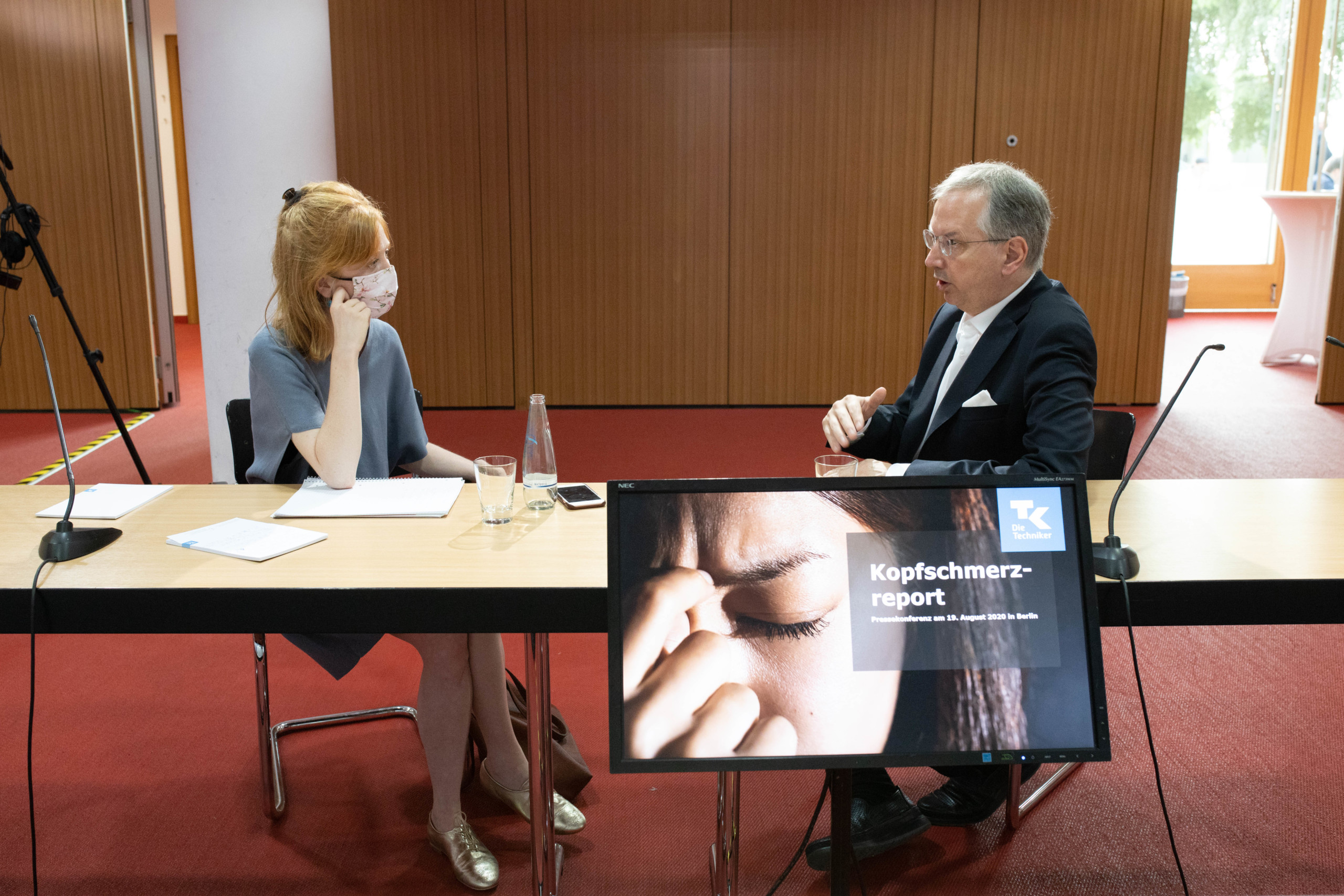

Berlin, August 19, 2020. More than one in eight young people in Germany (12.8 percent) suffer from medically diagnosed headaches – 15 percent of girls and almost 11 percent of boys. This is one of the findings of the headache report presented today by the Techniker Krankenkasse (TK) health insurance company. Of the 15- to 19-year-olds plagued by headaches, about one in three (31 percent) has migraine. Among children up to 14 years of age, 4.3 percent are affected by headaches.
“Headaches are already a major issue among children and teenagers. Therefore, parents should be sensitive to this and carefully consider with a doctor when medication is necessary,” says Dr. Jens Baas, Chairman of the Board of TK (Techniker Krankenkasse). TK's analysis shows that almost 23 percent of children and teenagers aged zero to 19 were prescribed pain medication in 2018 when diagnosed with a headache. “This isn't about demonizing painkillers. But responsible use is important to avoid future dependencies. Those who reach for paracetamol, ibuprofen, and similar medications too quickly risk harming their bodies. Much can also be achieved by adjusting one's lifestyle; for example, exercise, relaxation, and regular sleep and meal times are important,” Baas continues.
One in eight adults has a headache at least once a week
A representative Forsa survey commissioned by the TK health insurance company reveals that headaches are widespread among adults. This method was chosen because it can be assumed that many adults do not consult a doctor for headaches. Therefore, the frequency of headaches is significantly underrepresented in health insurance data. According to the survey, one in eight people (12 percent) experiences headaches at least once a week, while another 21 percent report suffering from headaches one to three times a month. Furthermore, the survey highlights that headaches are predominantly a female issue. Twenty percent of women experience headaches at least once a week, compared to four percent of men. Thirty-six percent of female respondents report that headaches severely or significantly impair their quality of life.
Painkillers are part of everyday life for many people
When they need painkillers, seven out of ten people surveyed reach for over-the-counter medications available at pharmacies. The most popular by far is the active ingredient ibuprofen. Professor Dr. Hartmut Göbel from the Kiel Pain Clinic reports: “Painkillers have become a staple; they are part of everyday life for many people. Even though it may sound paradoxical at first, taking too many painkillers can actually cause headaches.” Therefore, it is important to follow the 10-20 rule: “Painkillers for migraines and tension headaches should be taken on fewer than ten days per month—and none at all on at least 20 days per month.”
(Hidden) advertising for painkillers
The neurologist and specialist in pain therapy criticizes the fact that manufacturers are not required to provide clearer warnings about risks on painkiller packaging. He adds that advertising for painkillers often suggests they are a simple solution for increased performance. “But in the long run, they are not a simple solution. It is extremely important that those affected address their headaches early on and learn how to manage and prevent them,” says Göbel.
Furthermore, the headache report shows that the pharmaceutical industry's involvement in platforms such as patient forums, blogs, and YouTube videos is often difficult to detect. TK CEO Baas: “Those seeking information about headaches online often find it nearly impossible to distinguish neutral information from advertising. Headache tests that recommend a specific painkiller are a prime example. Therefore, it's crucial to critically examine articles and tips.”
Headache information for children
Knowledge and targeted prevention are important steps in the treatment of migraines and headaches. Daily routine planning, diet, relaxation breaks, exercise, and sleep patterns have a significant impact on headaches and migraines. Regular meals and sufficient periods of rest and relaxation should therefore be a fixed part of children's and adolescents' daily lives.
New headache guide book for children
This health-promoting behavior is illustrated by the illustrator Eva Ernst and Prof. Hartmut Göbel in their collaborative children's book, "Goodbye Headaches...Be Animal Fit," which includes an information section for parents. This free book for children and teenagers, published by the Kiel Pain Clinic with the support of the Techniker Krankenkasse (a German health insurance company) in August 2020, is available to everyone. It can be downloaded free of charge from the internet or requested free of charge from the Kiel Pain Clinic by sending a stamped, self-addressed envelope (see address below).
- The book "Goodbye Headache" can be downloaded for free as an online version at schmerzklinik.de/kopfweh-ade
- Alternatively, a free book version can be requested by sending a self-addressed, stamped DIN A4 envelope (postage 1.90 Euro) to the Pain Clinic Kiel, Heikendorfer Weg 9-27, 24149 Kiel
- Migraine app download: http://qrco.de/migraene-app
The figures refer to children and adolescents who received a diagnosis of headache or migraine during a doctor's visit. The complete headache report is available on the TK press portal (search number 2088710). Further information about the report, such as infographics and interviews, can also be found there.
The Forsa survey of 1,001 respondents was conducted on behalf of TK at the end of February and beginning of March 2020.




Leave a comment