


How do hip hop and the topic of organ donation fit together?
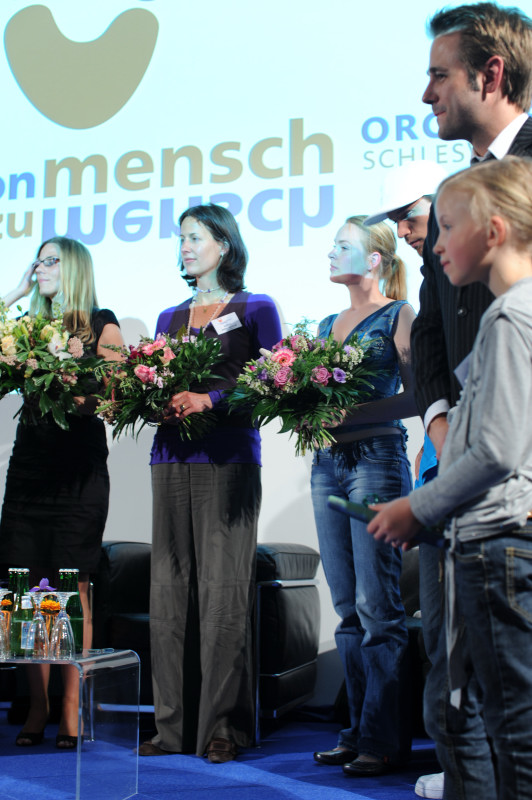
This was demonstrated by the Hamburg rapper Bo Flower at the organ donation dialogue of the Schleswig-Holstein Ministry of Health and the TK health insurance company on April 27, 2009, at the Kunsthalle in Kiel. He and his band sang the title song of the music project of the same name, “From Person to Person”.
“Hip hop offers the opportunity to address even difficult topics in lyrics,” the musician explains. And he’s right. After all, in what other musical style could a word like “organ donor card” be incorporated into the lyrics without any problems?
And what are our feelings about the word “organ donor card”? Reactions range from “I don’t think it’s bad at all, I just haven’t had the opportunity to get one yet” to the fear of donating organs while not yet dead.
Organ donation allows you to save the lives of other, seriously ill people after your own death. The willingness to donate organs is a very personal decision. For many, confronting the issue of organ donation represents their first encounter with their own mortality. This is naturally frightening.
Added to this are uncertainty, lack of knowledge, especially regarding medical matters, and a great deal of misinformation. Anyone considering becoming an organ donor should only make a well-informed and thorough decision.
An organ donor card allows you to document your decision for or against organ donation – regardless of your choice. In any case, it's advisable to fill out an organ donor card.
You can use the organ donor card to consent to or refuse organ donation. This allows you to help your loved ones and relieve them of this difficult decision. Alternatively, you can consciously choose to transfer the decision to someone else. You also have this option on the organ donor card.
Your data will not be recorded, and if you change your mind, you simply need to destroy the organ donor card. You can then record your current wishes on a new card. Afterwards, you should carry it with your personal documents.
Every day in Germany, three people die because they do not receive a donor organ in time.
From person to person
Giving life – celebrities advocate for organ donation. Although 80 percent of people in Germany are in favor of organ donation, only one in seven carries an organ donor card. In the first half of 2008, the number of organ donors declined for the first time in years.

Sophie, 6 years old, lives thanks to organ donation
The Ministry of Health of the state of Schleswig-Holstein and the TK launched their organ donation campaign “From person to person” on April 27, 2009.
The event was actively shaped by, among others, Dr. Gitta Trauernicht, Minister for Social Affairs, Health, Family, Youth and Seniors of the State of Schleswig-Holstein; Helmuth Doose, Deputy Chairman of the Board of the Techniker Krankenkasse (TK) health insurance company; organ donors; and the musicians Nele Kohrs and Bo Flower, who are advocating for organ donation through a music project. Organ donors, experts from various fields, and young artists shared their experiences and discussed the latest developments. Participants included Health Minister Dr. Gitta Trauernicht, TK board member Helmuth Doose, Prof. Dr. Dieter Bröring (University Hospital Schleswig-Holstein, Kiel), Associate Professor Dr. Conny Bürk (University Hospital Schleswig-Holstein, Lübeck), Associate Professor Dr. Nils Frühauf (German Organ Transplantation Foundation, DSO), Prof. Dr. Hartmut Rosenau (Director of the Institute for Systematic Theology at Kiel University, spokesperson for the Center for Ethics), the artists Nele and Bo Flower, and organ donors. The event was moderated by ARD television presenter Dennis Wilms.
86 percent of people in Germany do not carry an organ donor card. If someone has not expressed their decision for or against organ donation during their lifetime, their relatives must decide whether to consent to organ removal. This is a difficult situation for everyone involved—relatives and treating physicians—because many families have never discussed the topic. In a Forsa survey on organ donation commissioned by the Techniker Krankenkasse (TK) health insurance company, one in three respondents stated that they had never considered the issue and did not feel sufficiently informed.
“The data shows that the better informed people are, the more positive their attitude towards organ donation,” explains Prof. Dr. Norbert Klusen, Chairman of the Board of TK, regarding the telephone campaign. “Many people have reservations because they don’t know how organ donation works. Furthermore, some believe they are ineligible for organ donation due to health or age reasons. We want to educate and inform people and thus ensure greater transparency.”
12,000 people in Germany are currently on the waiting list for a donor organ. Every day, three of them die because they do not receive the life-saving organ in time. As the Forsa survey shows, the reasons given by respondents for not filling out an organ donor card are mostly due to a lack of information, misunderstandings, and prejudices.
The event therefore explains the seven most common misconceptions related to organ donation:
1. “I am too young / I am too old to donate an organ.” There is no minimum or maximum age for organ donation. Since there are patients of every age waiting for a life-saving donor organ, there is no upper or lower age limit.
2. “For religious or ethical reasons, I refuse organ donation.” The Catholic and Protestant churches, as well as the Central Council of Muslims, advocate organ donation as an act of charity and solidarity with the sick and disabled. However, since Jewish law does not recognize brain death as the end of life, organ removal is only permitted once the heart has stopped beating. For example, corneal transplants are possible after death.
3. “I’m afraid of being prematurely declared dead in the hospital if they urgently need organs.” A prerequisite for organ donation is the complete and irreversible brain death of the patient. This must be determined independently by two doctors at least twelve hours apart.
4. “I haven’t had time to register as an organ donor yet.” The organ donor card is a simple paper document that you should always carry with you. The information it contains is not registered anywhere. Many health insurance companies send out the cards free of charge. The card is also available for free download on many websites.
5. “For health reasons, I cannot be an organ donor.” Organ donation is not an option if the deceased was acutely ill with cancer or had serious pre-existing conditions such as AIDS or tuberculosis. Whether organ donation is medically possible is determined by doctors after brain death, when organ donation is actually imminent. A health check during the person's lifetime is therefore not necessary.
6. “If I carry an organ donor card, I am an organ donor.” The organ donor card allows you to document your personal wishes regarding what should happen in the event of your death. You can also state that you object to organ donation, limit your consent to specific organs, or exclude certain organs. Furthermore, you can delegate the decision regarding organ donation to another person, who will be named on the card.
7. “I’m afraid my family won’t recognize me after my organs are removed during a transplant.” The surgical procedure for organ removal is performed with the same surgical care as any other operation. After the explantation, the body is transported in a dignified manner for burial.
Source: TK
http://www.tk-online.de/tk/medizin-und-gesundheit/behandlungen/organspende/18570
http://www.organspende-info.de/extra/bestellservice/Organspendeausweis/
We have compiled some impressions for you here.












Leave a comment