


Digital healthcare innovation with significant benefits for the future region of digital health (ZDG)

The Digital Health Future Region (ZDG) is an initiative of the Federal Ministry of Health, planned to run until the end of 2022
This video explains to physicians how to use the migraine app developed by the Kiel Pain Clinic and the Techniker Krankenkasse (TK) health insurance company in professional healthcare settings and how to interpret the aggregated healthcare analyses for timely therapy adjustments. The video is specifically designed as a training film for using the migraine app within the Digital Health Future Region (ZDG). The Digital Health Future Region is an initiative of the Federal Ministry of Health, planned to run until the end of 2022. Its goal is to promote the practical application of digital healthcare solutions in the test region of Berlin. Furthermore, it aims to gather insights into the use of digital healthcare applications in the German healthcare system. Further information on the development of the Digital Health Future Region can be found here .
Physicians play a crucial role in the success of the Digital Health Future Region. As the direct contact person and primary healthcare provider for their patients, they are key contributors to the healthcare process. If physicians want to keep pace with digitalization in their practices, they must be as familiar with migraine apps and other digital healthcare solutions as they are with their blood pressure monitors or ECGs. Only through comprehensive training and skills development can they implement technological innovations in their daily practice. This enables innovative and modern diagnostics and treatments to be provided professionally. If you are a physician interested in becoming a ZDG (Digital Health Future Region) physician, you can find more information here. Learn how to become a ZDG physician or contact the Digital Health Future Region office for further details.

The goal of the Digital Health Future Region (ZDG) is to bring digital healthcare solutions into greater practical application in the test region of Berlin
The migraine app was developed in collaboration with specialized physicians, headache scientists, healthcare experts from the Techniker Krankenkasse (TK) health insurance company, and self-help groups involved in the treatment of migraine and headache patients within the nationwide headache treatment network. The iOS version was released in October 2016, followed by an Apple Watch extension in December 2016. The Android version was released in February 2017. As of March 2020, the app had been downloaded approximately 250,000 times. Based on user numbers and app store ratings, the medical device-certified migraine app is the most widely used digital application for migraine and headache care in Germany. Furthermore, the migraine app is the first app to be directly integrated into the medical treatment and therapy for migraine and headaches within the framework of statutory health insurance through a healthcare contract with the TK, pursuant to Section 140a et seq. of the German Social Code, Book V (SGB V) [1-3]. The integration of the migraine app into active care leads to a demonstrably significant benefit for patients and physicians [4].
Aggregated information, reporting, information and self-help tools
The digital healthcare application documents the course of migraines and headaches with active data input. It provides aggregated information from the data set, thus assisting both patients and their physicians in monitoring progress and treatment success, as well as adjusting therapy. The migraine app includes reporting, information, and self-help tools. It is registered as a Class I medical device. The concept focuses on the professional integration of migraine and headache patients into their daily care. Key objectives include facilitating monitoring of progress and treatment success, increasing therapy adherence, providing digital support and guidance for treatment under medical supervision, enhancing therapy motivation, and disseminating information and knowledge about the condition. Additionally, the app facilitates nationwide digital networking among affected individuals through self-help communities via a closed Facebook group and the Headbook community, thereby creating a digital form of self-help group organization. This organization is now a registered association and the largest self-help group on this topic in Germany.
The functions of the migraine app

The migraine app helps patients with chronic headaches to digitally document their disease progression accurately, analyze it with just a few clicks, and monitor it
The migraine app helps patients with chronic headaches to digitally document their condition accurately, analyze it with just a few clicks, and monitor their progress. Table 1 provides an overview of the individual functions and the menu structure. The migraine app gives users feedback and information based on the analyzed data. It suggests behavioral measures based on the entered individual data. For example, if the user exceeds the maximum permitted acute medication of no more than nine days per month, they receive a warning. Patients also have access to comprehensive information and self-help tools. These allow them, among other things, to determine and reduce their risk of developing chronic headaches, find a nearby pain specialist using a navigation tool, or practice progressive muscle relaxation in various forms under guidance. In the expert live chat, users can ask headache specialists questions and receive targeted answers.
Digital orientation: Migraine aura or stroke?
The migraine app also includes a simulation of a migraine aura. It shows what visual disturbances look like during migraine attacks. Since the symptoms of a migraine aura are often mistaken for those of a stroke, this allows for a simpler and faster differential diagnosis for both patients and doctors.
Migraine app usage reduces headache and medication days
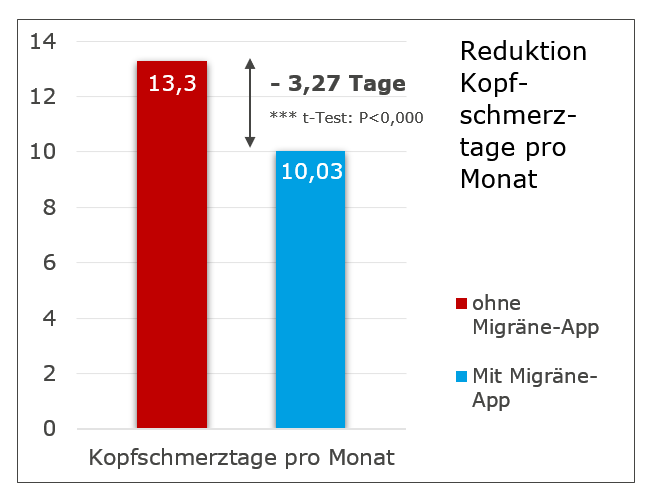
The use of the migraine app is associated with a significant reduction in pain days of around 25% per month.
A comprehensive study [4] by the Kiel Pain Clinic and the Techniker Krankenkasse (TK) health insurance company shows that using the migraine app significantly reduces the number of headache days. Users of the migraine app suffer from headaches on average 25% fewer days per month than those without the app – an average of 10 days instead of 13.3. The study demonstrates that patients benefit significantly from using the migraine app as part of their treatment. They experience fewer headache days per month, and the need for acute headache medication also decreases. By comparison, most preventative headache medications reduce the number of headache days by an average of one to two days per month. The migraine app shows that scientifically based digital services in healthcare provide tangible added value for individual patients and the insured community.
Approximately 10 million fewer headache days per year
Extrapolating to all app users, with approximately 250,000 downloads to date, the reduction in headache days in Germany can be estimated at around 10 million days per year. The study also demonstrates that the app supports medical treatment and that digital medicine has arrived in modern medical consultations. Seven out of ten users surveyed (71%) bring the migraine app to their doctor's appointments. 58% use the app's results to decide on therapy together with their doctor, particularly to adjust medication. 76% say that the app helps them adhere to their treatment plan developed with their doctor. Furthermore, 80% prefer the app to a traditional paper pain diary.
Comparison of digital healthcare with conventional healthcare

The migraine app enables data-based exchange on an objective data basis regarding the impact of the pain condition
Self-monitoring and documentation of the headache phenotype for monitoring progress and treatment success are prerequisites for individually tailored and operationalized headache therapy. Therefore, keeping a headache diary was included early in the guidelines for headache treatment [5]. Table 2 compares the possibilities of digital care with the migraine app and conventional care. Paper-based pain calendars and pain diaries have several disadvantages. Information entry is static, data aggregation to support clinical decisions is not performed, documentation is limited, and it is frequently misplaced or forgotten. The use of apps in medicine is therefore among the earliest professional applications of mobile computing technology. They were used early on for monitoring progress and treatment success in pain and headache therapy [6-9]. Mobile software applications have several advantages over paper documentation. Smartphones are generally carried at all times and are the primary communication device for over 80% of the population. Documentation of the headache phenotype and its course over time can be performed immediately. Progress parameters can be entered directly into the app. Current information about environmental variables, such as air temperature, air pressure, and location, can be automatically added digitally. The smartphone can then generate clear, aggregated analyses and reports from the data, which can be used directly for treatment decisions without requiring time-consuming data analysis. Progress patterns can thus be identified directly and used as a basis for further treatment in clinical practice [10]. Monitoring progress and success with smartphone applications has proven to be more reliable than paper diaries. They demonstrate higher compliance compared to paper diaries [11], with a compliance rate of 94% for electronic diaries compared to only 11% for paper diaries [12].
Communication with patients during pain consultations is a core task for physicians and their teams in the practical aspects of patient care. The migraine app facilitates an informed exchange about the impact of the pain condition, based on objective data. This communication demonstrates to patients that their concerns are being heard and that the physician is keeping pace with current developments in healthcare. Based on the app's objective analysis of patient progress, physicians and patients can listen attentively, ask questions, and exchange information.

Quantitative progress parameters enable patients and doctors to optimize therapy adjustments, monitor progress, and increase the effectiveness of the treatment.
The migraine app strengthens the communication skills of both doctors and patients using data. It facilitates patient-centered conversations and the development of a trusting relationship. Doctors can provide clear explanations and encourage patients to ask questions. Misunderstandings can be resolved or prevented. The migraine app supports comprehensibility through knowledge and information. Doctors can express themselves clearly and avoid technical jargon.
The digital application also saves time through aggregated, valid data that can be used immediately for decision-making, which the patient can understand. The migraine app involves the patient in treatment decisions by providing transparency regarding the course of treatment and its success to date.
Shared use by doctor and patient
Based on quantitative progress parameters, patients and physicians can optimize therapy adjustments, monitor progress, and increase the effectiveness of treatment. For this purpose, the consultation checklist has been integrated into the migraine app. It can be accessed directly from the app's overview page by both patients and physicians in the cockpit (Figures 1 and 2). Here, the consultation checklist contains summarized data sets for the current and previous year. This analysis can be exported as a PDF form, for example, via email, and integrated into the physician's practice management system. Data can also be stored in the electronic patient record. Data retrieval requires active authorization from the patient.
Analysis of headache characteristics

The impact of headaches on work, school, and university activities is particularly relevant for assessing the severity of the headache disorder
The annual report shows the aggregated data sets for each month of the year (Figure 3). The first four columns differentiate the main headache phenotypes. Column A contains the days with migraine aura, column M the days with migraine, column S the days with tension-type headache, and column U for other headache types. Migraine and tension-type headache account for over 92% of all headaches in the population. Therefore, the migraine app focuses on these two main types. Since the International Classification of Headache Disorders (ICD) differentiates 367 main types of headache, it is not possible to meaningfully document all headache phenotypes and headache subtypes [13, 14].
Assessment of headache-related impairment
Using the migraine app requires a trained patient who can differentiate their headache type in everyday life. Since the patient also needs to know which acute therapy or other treatment measures to use for each headache type, distinguishing the headache phenotype is a prerequisite for professional treatment. Therefore, the digital healthcare application does not need to prospectively query all characteristics of the headache phenotype for every attack. The patient enters the relevant characteristics in the "Quick Entry" menu and also documents the severity, duration, type of acute medication used, and its effectiveness. At the same time, they document the impact of the headaches on work, school or university, household chores, and social and leisure activities. The migraine app progressively records the degree of impact on these areas. A reduction in activity of more than 50% is documented for recording the degree of impairment caused by headaches. The migraine app also records whether the activity is completely impossible in the respective area due to the headache. If this affects work, school, or studies, a day of incapacity for work (sick leave) is recorded. If activities at home or during leisure time are completely impossible, this is documented as 100% impairment. The days of impairment due to headaches are totaled per month and represented in the last column as GdBK points, as the "degree of impairment due to headaches." Thus, the patient and physician receive a direct quantitative representation of the impairment caused by headaches in the respective month. This score is calculated analogously to the MIDAS score [15-17]. The MIDAS score retrospectively records the corresponding impairments for a period of 3 months from memory. It is evident that the value obtained in this way is considerably more prone to error. In contrast to the MIDAS score, the data for determining the GdBK are collected continuously and prospectively, so the reliability is considered higher.
The direct analysis of the collected progress parameters can be used directly for treatment decisions. A significant decrease in migraine days per month of at least 50% can operationally demonstrate the effectiveness of a chosen headache prophylaxis. The treating physician can directly determine whether, for example, the chosen medication is effective or whether a treatment adjustment is necessary, such as increasing the dose or switching medications. Furthermore, the analysis of headache days per month can reveal the development of chronic migraine. If the total number of migraine days and days with other headaches exceeds 15 for a period of more than three months, a diagnosis of chronic migraine may be justified.
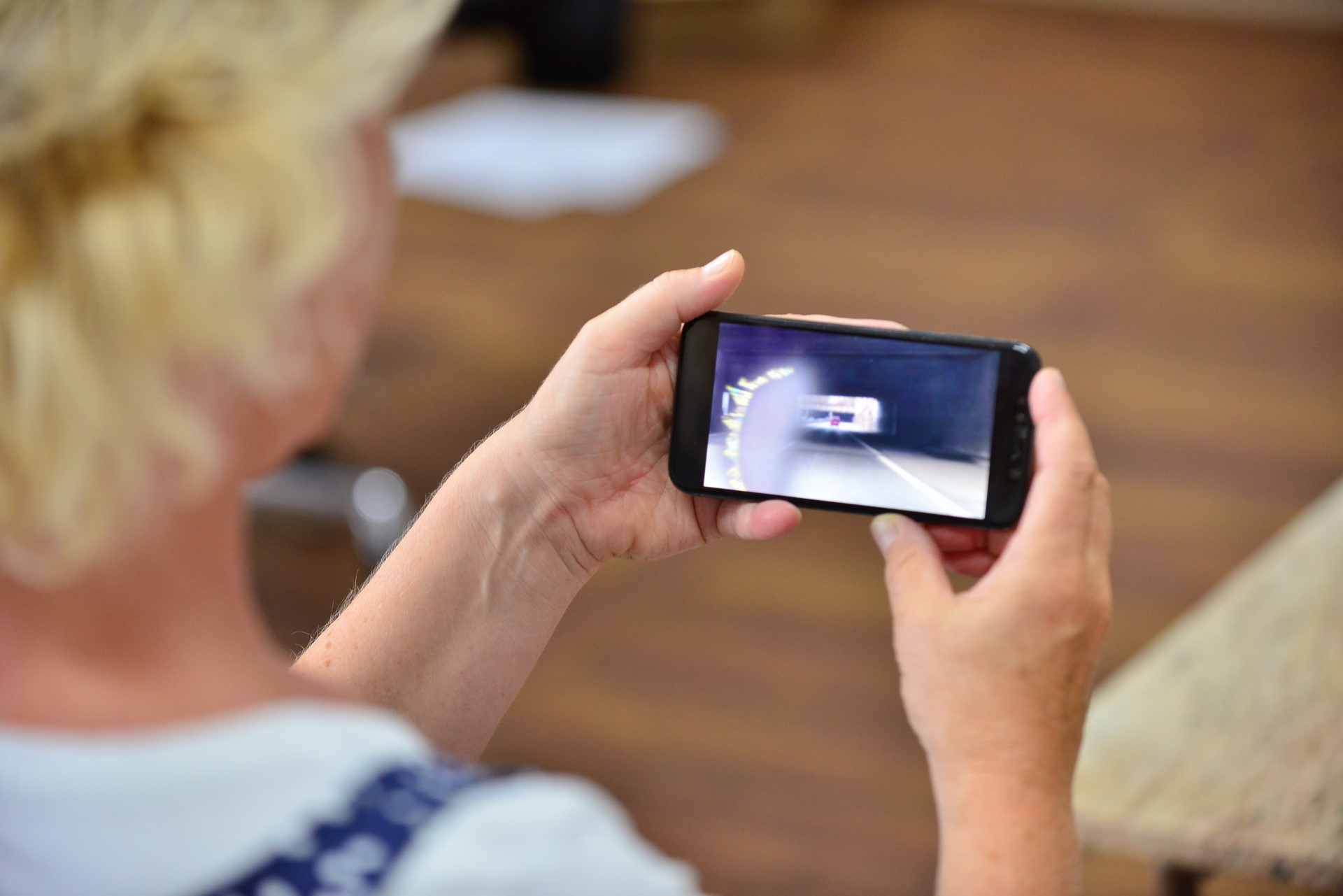
The migraine app includes, among other things, a simulation of a migraine aura. It shows what visual disturbances look like during migraine attacks. Since the symptoms of a migraine aura are often mistaken for those of a stroke, this allows for a simpler and faster differential diagnosis for both patients and doctors
Analysis of the severity and duration of headache attacks
The effectiveness of headache therapy can also be assessed by examining the severity and duration of headache attacks. For both severity and duration, the individual values for each month are summed, and an average is calculated. Headache severity is documented using a score (0 = none, 1 = mild, 2 = moderate, 3 = severe, 4 = very severe). The respective gradations are described in the legend on the evaluation PDF (see Figure 3). A reduction in the average severity and duration of headache attacks can be used to measure the effectiveness of both preventive and acute treatment.
Analysis of drug effects
The operational evaluation of the effectiveness of acute therapy can be achieved through analysis of medication efficacy. First, the number of days taken for acute therapy is recorded for each month. A decrease in the need for acute medication can also be interpreted as an indication of effective prophylaxis. Conversely, an increase in, or even exceeding, 10 or more days of medication use per month can be considered an indication of increasing chronicity and the development of medication-overuse headache. In this case, it is crucial to discuss with the patient in detail that the 10-20 rule must be adhered to and that exceeding the 10-day limit promotes further chronicity. Simply advising the patient to limit acute medication use per month and possibly instructing them on how to implement a medication break can significantly stabilize and improve the headache pattern.
The effect of acute medication can be determined using the medication effect. For this purpose, a score for the medication effect is shown. The drug effect (grading 0= no effect, 1= weak, 2= medium, 3= good, 4= very good) shows an effect of 0 in the worst case and an effect of 4 in the best case. Ideally, a score between 3- 4, ie good to very good, is the aim. If the score is below 3, an adjustment of acute therapy should be considered.
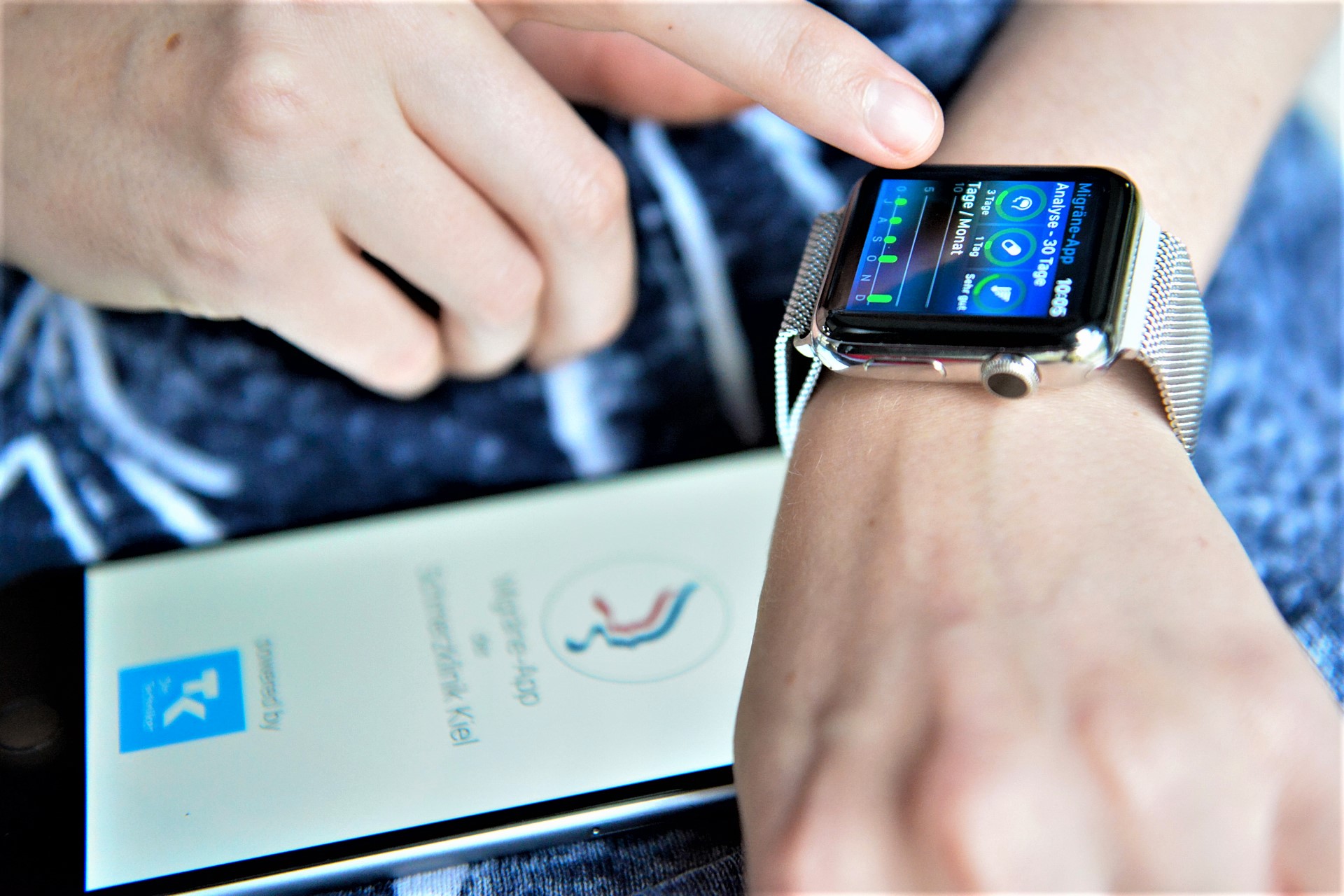
The migraine app is also optimized for use via the Apple Watch
Degree of impairment of headaches, GdBK score
The effects of headaches on activities at work, school and studies are particularly relevant for assessing the severity of the headache. This also applies to the impact on household activities as well as on leisure and social activities. The migraine app continuously and prospectively documents the degree of impairment caused by the headache for the respective areas and aggregates this data monthly. For each month, the sum of the affected areas of activity is created into an overall score. This overall score is referred to as the GDBK point score and quantitatively reflects the degree of impairment caused by headaches. The GDBK points can therefore directly quantify the headache-related impairments for the respective month. The increase or significant decrease can directly and quantitatively document the effectiveness of the headache treatment and the effects of the headache on the quality of life in the follow-up. A reduction in the GdBK score of 30% or more can be considered a clinically significant improvement.
The consultation checklist makes it possible for doctors and patients to immediately track headache symptoms over the last few months and to make individual, data-based therapy adjustments. However, it is essential that the doctor can make an appropriate interpretation of the data pattern. If the migraine app is trained accordingly, the migraine app is an objective tool for analyzing the course of the disease and optimizing therapy in care for both the patient and the doctor.
Table 1. Overview of the functions and menu structure of the migraine app
|
menu |
functions |
|
My overview (cockpit) |
Aggregated data analysis of the last 6 months Call for a checklist for medical consultations for monitoring progress and success Analysis of migraine and headache-related impairment |
|
Quick entry |
Entry of a new headache attack according to ICHD -3 criteria - Headache parameters - Accompanying symptoms - Acute medication (retrieved from database, analyzed according to the 10-20 rule) - Headache-related impairment (degree of disability) - Automatic addition of local weather data - Remarks on the attack |
|
Pain calendar |
Monthly overview of headache progression. Editing of entered data |
|
Medication intake |
Documentation of preventive medications |
|
Evaluation |
Data aggregation for physicians on a monthly or |
|
Other |
|
|
Aura simulation |
Simulation of a migraine aura in the |
|
Aura Demo Type 1 |
Representation of a visual migraine aura with |
|
Aura Demo Type 1 |
Representation of a visual migraine aura with |
|
Chronicity |
Scale for the analysis and prevention of |
|
Rapid test |
Rapid headache test for differentiating |
|
Triptan threshold |
Rapid test to determine the optimal time to take acute medication (analgesics, triptans) |
|
Expert search |
Find and navigate to headache experts in the nationwide headache treatment network in your local area |
|
Progressive muscle relaxation |
Comprehensive audio guide to progressive muscle relaxation training in long form (45 minutes) |
|
Progressive muscle relaxation (briefly) |
Audio instructions for training progressive |
|
Muscle relaxation for children |
Audio instructions for training progressive |
|
information |
|
|
Pain Clinic News |
Information center on current topics in migraine |
|
Media library |
Video library on current topics in migraine |
|
Headache knowledge |
Library on current topics in migraine |
|
Headache classification |
Original version of the International |
|
Communities |
|
|
Headbook Community |
Digital self-help group for migraine and |
|
Live chat |
Expert live chat on questions regarding migraine |
|
Facebook community |
Digital exchange on migraine and |
|
Settings |
|
|
Memories of PMR |
Memories of |
|
Warning 10-20 rule |
Warning if the dose of |
|
Reminders preventive medications |
Reminder function for preventive medication for daily intake, at intervals of 4 weeks or 3 months |
|
MIDAS score |
Retrospective analysis of migraine-related impairment using the MIDAS score |
|
Backup/Export |
Data backup via backup, export and transfer to another device (only possible actively by the user) |
|
Video tutorials |
|
|
Video clips |
Video clips explaining the various functions of the migraine app |
literature
- Diener HC, Gaul C, Jensen R, Göbel H, Heinze A, Silberstein SD (2011) Integrated headache care. Cephalalgia 31(9):1039–1047. doi:10.1177/0333102411409075
- Göbel H, Heinze A, Heinze-Kuhn K, Henkel K, Roth A, Ruschmann HH (2009) [Development and implementation of integrated health care in pain medicine: the nationwide German headache treatment network]. Pain 23(6):653–670. doi:10.1007/s00482-009-0857-7
- Göbel H, Heinze-Kuhn K, Petersen I, Göbel A, Heinze A (2013) [Integrated headache care network. Kiel Migraine and Headache Center and German National Headache Treatment Network]. Schmerz 27 (2):149-165. doi:10.1007/s00482-013-1307-0
- Göbel H, Frank B, Heinze A, Zimmermann W, Göbel C, Göbel A, Brunkhorst J, Rupp K (2019) Health behavior of migraine and headache patients receiving digital therapy support with the migraine app. Der Schmerz 33 (2):147-155. doi:10.1007/s00482-018-0355-x
- Diener HC, Brune K, Gerber WD, Göbel H, Pfaffenrath V (1997) Treatment of migraine attacks and migraine prophylaxis. Dtsch Arztebl 94 (46)
- Wallace LS, Dhingra LK (2014) A systematic review of smartphone applications for chronic pain available for download in the United States. J Opioid Manag 10(1):63–68. doi:10.5055/jom.2014.0193
- Martinez-Perez B, de la Torre-Diez I, Lopez-Coronado M (2013) Mobile health applications for the most prevalent conditions by the World Health Organization: review and analysis. J Med Internet Res 15(6):e120. doi:10.2196/jmir.2600
- Rosser BA, Eccleston C (2011) Smartphone applications for pain management. J Telemed Telecare 17(6):308–312. doi:10.1258/jtt.2011.101102
- Hundert AS, Huguet A, McGrath PJ, Stinson JN, Wheaton M (2014) Commercially available mobile phone headache diary apps: a systematic review. JMIR Mhealth Uhealth 2(3):e36. doi:10.2196/mhealth.3452
- Oltrogge JH, Brockmann S, Scherer M (2018) Headache in general practice. Journal of General Medicine 7-8:306-312
- Jamison RN, Raymond SA, Levine JG, Slawsby EA, Nedeljkovic SS, Katz NP (2001) Electronic diaries for monitoring chronic pain: 1-year validation study. Pain 91(3):277-285
- Stone AA, Shiffman S, Schwartz JE, Broderick JE, Hufford MR (2003) Patient compliance with paper and electronic diaries. Control Clin Trials 24(2):182-199
- IHS (2018) The International Classification of Headache Disorders, 3rd edition. Cephalalgia 38(1):1-211. doi:10.1177/0333102417738202
- Olesen J (2018) International Classification of Headache Disorders. Lancet Neurol 17(5):396-397. doi:10.1016/S1474-4422(18)30085-1
- Stewart WF, Lipton RB, Kolodner K (2003) Migraine disability assessment (MIDAS) score: relation to headache frequency, pain intensity, and headache symptoms. Headache 43(3):258–265
- Stewart WF, Lipton RB, Kolodner KB, Sawyer J, Lee C, Liberman JN (2000) Validity of the Migraine Disability Assessment (MIDAS) score in comparison to a diary-based measure in a population sample of migraine sufferers. Pain 88(1):41-52
- Stewart WF, Lipton RB, Whyte J, Dowson A, Kolodner K, Liberman JN, Sawyer J (1999) An international study to assess reliability of the Migraine Disability Assessment (MIDAS) score. Neurology 53(5):988-994




Leave a comment