



 Approximately 50% of patients with more than 15 headache days per month for at least three months have medication-overuse headache (MOH) as an additional underlying cause for the increasing frequency of headache days, in addition to their original primary headache disorder. Most of these patients, with appropriate treatment, experience a reduction in headache days per month and a renewed response to preventive medication after a medication break, in contrast to their initial situation. This article explains important changes to the diagnostic criteria for the various subtypes of MOH following the introduction of the ICHD (International Classification of Headache Disorders) – 3beta in 2013. The new classification has a decisive and immediate impact on the prevention and treatment of MOH.
Furthermore, there are interrelationships with the new criteria for chronic migraine. In most patients, medication overuse headache (MOH) can remit through controlled medication intake according to the 10-20 rule or a medication break. If simply informing and counseling the patient does not lead to the cessation of medication overuse, a specially guided and coordinated medication break or withdrawal treatment is necessary.
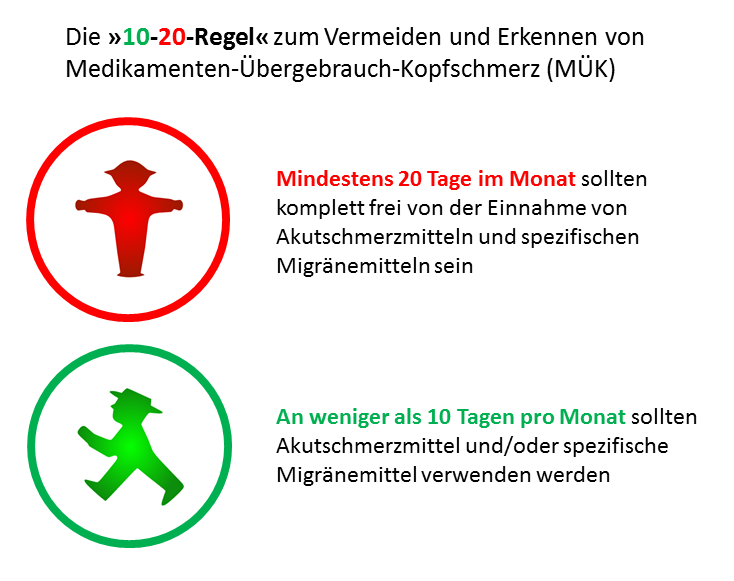 This treatment can be provided on an outpatient, day-clinic/partial inpatient basis, or inpatient basis. In uncomplicated cases, the outcomes of these three treatment settings do not differ. From a cost perspective, outpatient treatment is therefore justified in uncomplicated cases. In complicated cases, inpatient treatment within the framework of a multimodal treatment concept is significantly superior.
The current CME article in the journal DER SCHMERZ describes the classification and therapy of medication overuse headache (MOH) as well as the impact of the 3rd edition of the international headache classification on practice.
Download Classification and Therapy of Medication Overuse Headache (MOH)




Leave a comment