



Headaches are epidemiologically the most common and, after dementia and stroke, the third most expensive disease of the nervous system economically. In general medical practice, they are one of the most common reasons for visits to the doctor, they result in frequent inpatient emergency admissions if treatment is resistant and, in chronic cases, they cause serious disabilities and complications. Global epidemiological studies show that in adulthood, more than 11% of the population suffers from migraines, 42% from tension-type headaches and 3% from daily headaches. Due to its widespread distribution worldwide, tension-type headaches cause an even more serious social disability than migraines. The World Health Organization (WHO) lists headaches as the 10th most disabling condition for both sexes and 5th for women.
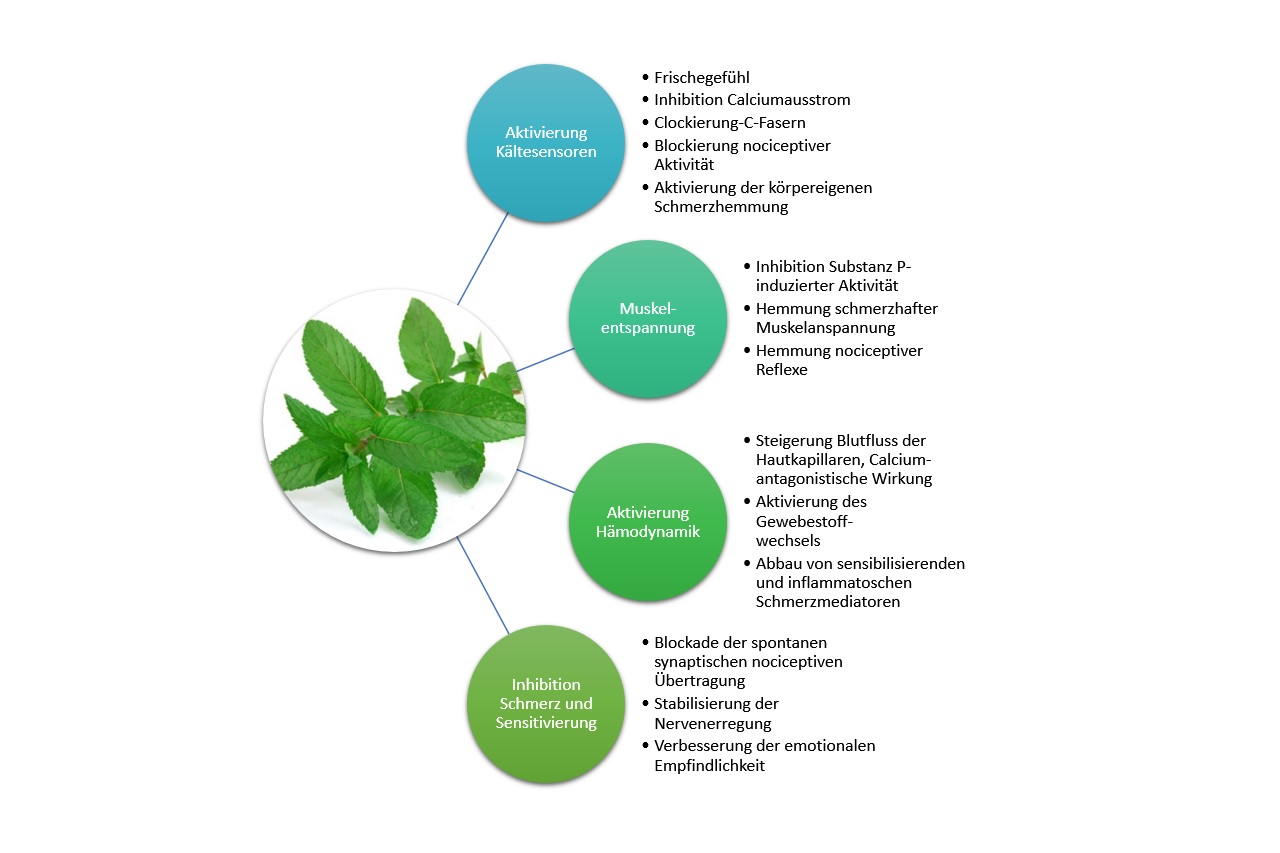
Topical topical treatment with peppermint oil (Oleum menthae piperitae) has been shown to be significantly effective compared to placebo in controlled studies. Peppermint oil intervenes in the pathophysiology of tension-type headache through numerous mechanisms of action. The effectiveness is comparable to that of acetylsalicylic acid or paracetamol. 10% peppermint oil in ethanolic solution is approved for the treatment of tension-type headache for external use in adults and children from 6 years of age. It is included in the guidelines of professional societies and is considered a standard medication for the acute treatment of tension-type headaches.
The current review shows that in carefully controlled studies, 10% peppermint oil in ethanolic solution when applied locally to the painful areas of the forehead and temples leads to a highly significant reduction in tension-type headaches compared to placebo treatment. The therapeutic effects are clinically significant. Tolerability is very good. The analgesic mechanisms of peppermint oil are very complex. They include both central and peripheral effects. Studies in recent years have demonstrated the pronounced analgesic effects of peppermint oil on both a clinical, neurophysiological and molecular level. Based on the study data, 10% peppermint oil in ethanolic solution is approved for the treatment of tension-type headache for external use in adults and children aged 6 years and older. This is currently the only drug that has been approved for the specific indication of tension-type headache due to its proven effectiveness.
A key advantage to using topically applied peppermint oil for headaches is the lack of systemic effects. In particular, there is so far no evidence that headaches can arise from overuse of medication. Accordingly, the International Headache Classification does not list peppermint oil as a possible cause of headache due to medication overuse.
Peppermint oil has now also been included in therapy recommendations and guidelines from specialist societies. The guidelines of the German Society for Neurology point out the effectiveness of local, large-area application of peppermint oil. The German Migraine and Headache Society recommends giving preference to peppermint oil during pregnancy and its use in children. The practice guideline “Primary Headaches” from the German Society for Pain Medicine lists peppermint oil as a first-choice remedy for acute therapy for tension-type headaches.
According to clinical experience, none of the medications available today are effective for all types of pain and for all patients at all times. Therefore, different options are required. The analgesic effectiveness of peppermint oil is a preferred therapy option in many cases due to its proven effectiveness and good tolerability without systemic side effects and sensitization of the pain defense system with the risk of headaches if medication is overused.
Source:
CME The Pain, pp 1-16
First online: April 22, 2016
Oleum menthae piperitae (peppermint oil) in the acute therapy of tension-type headache
H. Göbel, , A. Heinze, K. Heinze-Kuhn; , A. Göbel; C. Göbel


I use 100% therapeutic grade peppermint oil and it almost always helps, quickly and without the numbing feeling I always had with painkillers.
For many years I used peppermint oil for migraines, then I couldn't tolerate the smell anymore. I've been using the red one for several years! Tiger Balm and find it very soothing.
I use peppermin oil very often when migraines begin and also during them.
It eases the pain a little.
But if I, for example, I also have neck problems and tension in the cervical spine. I rub peppermint oil on it, pack a warm scarf and it's fine the next day.