


Given the high prevalence of migraines, it is not surprising that several members of some families suffer from them. As early as the 19th century, it was therefore assumed that migraines were hereditary. A large number of studies were conducted to support this hypothesis.
Hereditary factors play a crucial role in the development of migraines. More than 70% of sufferers know first-degree relatives (parents, siblings, or children) who also suffer from migraines. Children of migraine patients have a two- to four-fold increased risk of developing migraines themselves compared to their peers. For a subtype of migraine, familial hemiplegic migraine, underlying gene defects have now been identified. These are responsible for the hypersensitivity to a wide range of internal and external stimuli, the so-called trigger factors, that is so characteristic of migraine patients.
These include, among other things, disruptions to the sleep-wake cycle, hormonal fluctuations, changes in blood sugar levels or current stress levels, unusual physical exertion, or disturbances caused by smells, noise, or flickering lights. This means that while the genetic predisposition for migraines is passed down through generations, whether a migraine actually occurs in an individual case, and if so, how severe and how frequent, is largely dependent on environmental factors.
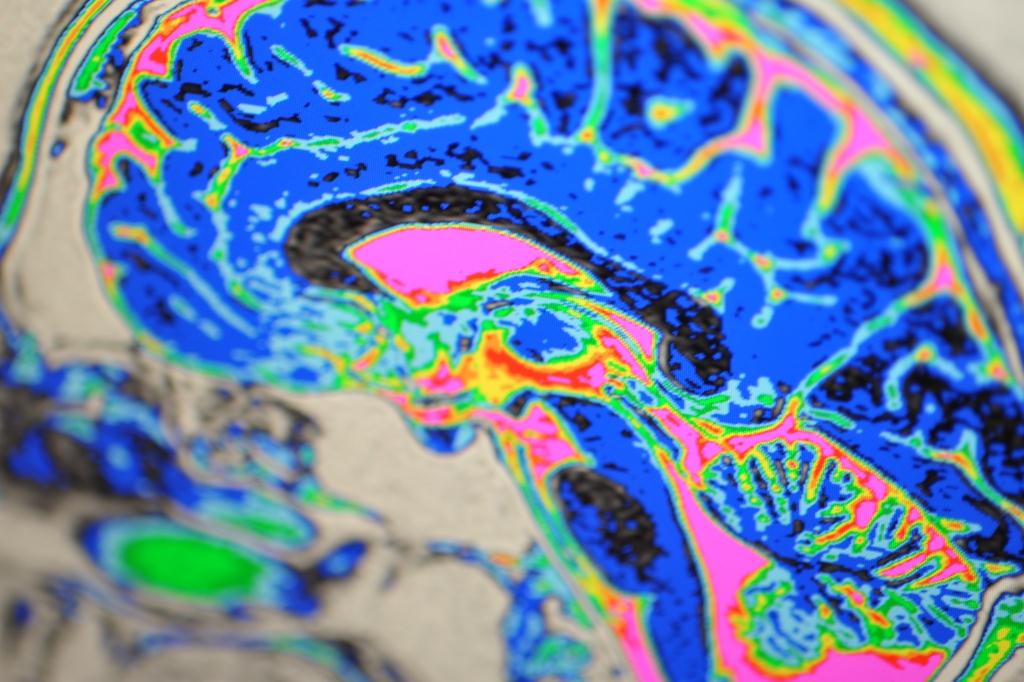
Migraines arise from altered signal transmission and disruption of the energy supply to nerve cells in the brain
A review of the studies reveals that parents and children of migraine patients have a higher probability of developing migraines than other people. This conclusion suggests that hereditary factors play an important role, but learning factors and behavior are equally significant. Modern migraine and genetic research has provided crucial further insights into the development of migraines.
In 2005, a research team from the Kiel Pain Clinic and the Institute of Human Genetics at the University of Bonn/Cologne discovered specific genetic alterations on chromosome 1 in patients with the most common forms of migraine. These alterations disrupt the excitability of nerve cells. If the nerves are overloaded too quickly or for too long, this can lead to a collapse in their energy supply. The regulation of nerve function becomes disrupted. Pain-inducing neurotransmitters are released unchecked by the nerve cells, causing the throbbing migraine headaches.
Migraine patients are characterized by a peculiarity in the way their brains process stimuli. Their nervous system is constantly on high alert. Stimuli are received by the brain earlier and faster, and processed more quickly. Until now, it was largely unknown why the brains of migraine patients function differently.
With these findings, the research team has discovered a key to understanding the migraine genome. Previously, genetic mutations were only known for extremely rare migraine subtypes. The scientists studied families over four years in which several individuals suffered from either migraine with aura or migraine without aura. These are the most common forms of migraine, responsible for more than 99% of all migraine attacks. The Kiel-Cologne research team searched throughout Germany for families in which at least two members suffered from migraine with aura. The study examined members of 45 families, in which an average of four people were affected. In one family, ten affected individuals were identified. The migraine subtypes were diagnosed using the latest internationally standardized headache criteria. Blood samples were taken from both affected and unaffected family members. Following precise diagnosis of the migraine forms, the genetic material was sent from the Kiel Pain Clinic to the Institute of Human Genetics at the University of Bonn or Cologne, where its structure was analyzed using special techniques.
In this study, the research team focused on the region of chromosome 1 where gene alterations had previously been found in an extremely rare subtype of migraine. This targeted center contains a gene for a specific ion pump in the brain, whose function is to regulate the excitability and energy supply of nerve cells. For the first time, the team of scientists discovered two previously unknown gene alterations in this region in patients suffering from the widespread migraine with aura. These alterations were found only in affected members of migraine families, but not in healthy control subjects. Further investigations showed that one of these gene alterations actually leads to a loss of function of the ion pump and thus likely also to a disruption of nerve excitability. The consequence can therefore be a collapse of the energy supply in the nerve cells during excessive or sudden stimulation of the nervous system in migraine patients. As a result, pain-inducing neurotransmitters are released in excess. These cause the migraine pain and accompanying symptoms during a migraine attack.
The research findings are significant for the future diagnosis and treatment of migraines. Migraine patients should maintain a consistent day-night rhythm. Abrupt and intense changes in stimuli should be avoided. A regular, carbohydrate-rich diet with sufficient vitamin B2 can stabilize the energy supply to nerve cells.
Relaxation training, biofeedback therapy, and stress management training prevent excessive nerve excitation and reduce energy consumption in nerve cells. During an attack, specific migraine medications called triptans stop the release of pain-inducing neurotransmitters. Preventive medications can normalize energy consumption in nerve cells.
Risk factor for migraine without aura and migraine with aura on chromosome 8
Scientists from the Kiel Pain Clinic and the University of Cologne/Ulm, in an international collaboration with researchers from, among others, the Wellcome Trust Sanger Institute (Cambridge), the Ludwig-Maximilians-University Munich and the Leiden University Medical Center, identified for the first time in 2010 a genetic risk factor associated with migraine with and without aura.
The identified genetic variant on chromosome 8 controls the amount of the neurotransmitter glutamate in the synapses of nerve cells via the neighboring genes PGCP and MTDH. Glutamate activates important nerve functions such as attention, memory, concentration, and perception.
The new discovery is considered crucial for understanding the onset of the most common migraine attacks. It offers new insights into the causes and treatment options for this widespread condition. Through a unique international collaboration of 65 researchers from 13 countries in what is the world's largest migraine study to date, a gene variant associated with the most common forms of migraine has been discovered for the first time. Previous studies had only been able to identify gene alterations in rare subtypes of migraine with aura. The newly discovered gene variant on chromosome 8 is found in migraine with or without accompanying neurological symptoms.
In previous studies, researchers had already identified gene loci responsible for very severe but rare subtypes of migraine. However, it remained unclear which genetic risk factors were responsible for the widespread, common migraine, that is, migraine with and without aura. To compile this data, a research group from the Kiel Pain Clinic collected and classified blood samples from affected patients and their family members over several years in Germany.
In the search for the key to common migraine, the genomes of over 6,000 migraine patients were compared with those of healthy control subjects. Researchers from over 13 countries participated in this international collaboration. The patient group from the Kiel Pain Clinic was one of the largest subgroups within the network, ultimately enabling the identification of the gene variant.
Completely unexpectedly, basic researchers were able to identify a variant on chromosome 8, called rs1835740, as the first known genetic risk factor for migraine. In the initial study, genetic material from over 2,500 migraine patients and 10,000 healthy individuals was compared. Due to the unexpected finding, this gene locus was re-examined in a second, very extensive replication study involving over 3,200 additional migraine patients and 40,000 control subjects. The international migraine network was thus able to confirm its initial suspicion.
Nerve excitability and glutamate
Due to a genetically determined high glutamate level, it appears that the transmission of nerve impulses across the synaptic cleft between nerves can be very rapid, sustained, and intense. Stress and irregular daily routines are the strongest triggers for migraines.
If the nervous system is activated too strongly, too intensely, too excessively, and too suddenly, this can initially lead to overactivation and ultimately to depletion of neurotransmitters. Nerve control could become disrupted, secondarily releasing inflammatory substances within the nervous system. These can cause painful inflammation of the blood vessels in the meninges, resulting in the throbbing and pulsating headache of a migraine.
The research approaches now discovered will make it easier in the future to intervene more effectively in the underlying causes of migraines. Current clinical studies have shown that those suffering from frequent attacks are characterized by a high sensitivity of the nervous system and the pain perception system. Both behavioral and experiential factors that contribute to the excessive activation of glutamate levels could now be specifically addressed in clinical research programs. The development of specific classes of substances that normalize glutamate levels could represent a further step toward the successful prevention of migraine attacks in the future.
Migraine is now understood as a progressive disease of the central nervous system. Prolonged and frequent migraine attacks cause structural changes in the nervous system. This, in turn, promotes a range of associated conditions. These include, in the neurological field, epilepsy, medication-overuse headache, and stroke; in the psychiatric field, depression, anxiety and panic disorders; and in the internal medicine field, heart attacks, coronary artery disease, and hypertension.
The constant overactivation of the nervous system due to elevated glutamate levels could also play a crucial role in the development of other diseases besides migraine. The identified genetic risk factor on chromosome 8 could be relevant as a common basis for these diverse diseases.