


Prevention with medication
With the introduction of triptans for treating migraine attacks, the importance of prophylactic medication for migraine has changed. In the past, the great significance of preventive drug therapy stemmed from the fact that effective and well-tolerated substances for treating attacks were not sufficiently available. The primary goal of prophylactic medications was therefore to reduce the number of migraine attacks.
Due to a lack of effective or tolerable acute treatment, the recurring migraine attacks usually had to be endured. This left those affected with the choice between frequent and potentially difficult-to-treat migraine attacks without prophylactic medication, or possibly less frequent attacks with prophylactic medication. The decision generally favored prophylactic medication. Patients then had to accept the side effects as the lesser of two evils – provided the desired effect was achieved.
Today, patients' needs have fundamentally changed. If a migraine patient has access to a well-tolerated and effective acute medication, they will likely be reluctant to undergo preventive treatment, which is associated with a relatively high probability of side effects and whose efficacy is also uncertain. This is especially true when considering the usual efficacy criterion for preventive medication, which requires only a 50 percent reduction in the number of attacks. Experience shows that patients do not consider reducing the frequency of taking an effective triptan from 6 days to 3 days per month, while experiencing a worsening of their general condition on the remaining 27 days, to be a desirable outcome.
Decision regarding drug-based prevention
Despite today's highly effective drug therapies for migraine attacks, there are several reasons for preventative medication. Firstly, there are still patients who cannot benefit from the advances in triptans because they either have contraindications (e.g., coronary artery disease) or belong to the minority of patients for whom triptans are ineffective or not tolerated. Secondly – and this is a crucial argument for migraine prophylaxis – even with the use of triptans, there is a risk of developing medication-induced headaches.
- The most important basic rule in acute migraine therapy is that acute headache medication (triptans such as painkillers) should be taken on a maximum of ten days per month. In other words, no acute migraine medication should be used on 20 days per month.
If migraine symptoms occur on the 11th, 12th, or 13th day of the month, the general rule is that the patient should endure these symptoms without acute medication to avoid the risk of developing medication overuse headache (MOH). Consequently, the primary goal of migraine prophylaxis today is to reduce the number of days on which migraine symptoms occur, thereby decreasing the frequency of acute medication use. The overarching goal must be to prevent the development of MOH. Therefore, the number of migraine days per month is more important than the frequency of migraine attacks when deciding on migraine prophylaxis.
Drug-based migraine prophylaxis is necessarily a long-term therapy. From the migraine patient's perspective, such long-term therapy is only acceptable if it is both effective and well-tolerated. Furthermore, long-term safety is a fundamental requirement. From this, general guidelines for achieving these goals can be derived.
Effective only for migraines
Medication-based migraine prophylaxis is a specific treatment for migraines – not for frequent headaches in general. In particular, headaches caused by medication overuse headache (MOH) remain virtually unaffected. In these cases, a medication break (drug holiday) is the first-line therapy. With few exceptions, the medications used are also ineffective for chronic tension-type headaches or cluster headaches. Therefore, medication-based migraine prophylaxis is only truly effective for migraines.
The dose must be right
Besides the choice of substance, the effectiveness of medication-based migraine prophylaxis depends crucially on the dose used. The most common reason for the failure of prophylaxis is an insufficient dosage.
Migraine prophylaxis medications do not work immediately: It usually takes 2 to 8 weeks before a noticeable decrease in migraine frequency occurs. Therefore, the effectiveness of a medication should only be assessed after 8 to 12 weeks.
There is practically no research on how long migraine prophylaxis should be continued. However, short-term use over a few weeks generally does not lead to a lasting effect. Periods of six to nine months are recommended.
Migraine prophylaxis does not usually lead to complete freedom from migraines – it only lengthens the intervals between attacks. Patients must be informed of this so that they do not discontinue prophylaxis after starting it due to perceived lack of effectiveness when the next migraine attack occurs.
Increase the dose slowly
While some migraine prophylactic medications can be started at the target dose immediately, most substances require a careful and gradual increase in dosage to minimize side effects. The rate of dose escalation should be individually tailored. For beta-blockers, tricyclic antidepressants, valproic acid, or Topamax, several weeks should be allotted for dose escalation. While migraine prevention is not listed in the package insert for some medications, their effectiveness may still be established through current studies.
Possible side effects
Migraine prophylaxis also involves the use of substances that, despite adherence to all instructions, can potentially cause permanent health damage. Since migraine is a condition that, with the exception of the rare migrainous infarction, does not itself lead to organ damage, such a complication from drug treatment is ultimately unacceptable.
Substances whose long-term use can lead to medication overuse headache (MOH) are generally unsuitable for migraine prophylaxis. This includes painkillers as well as ergot alkaloids – even if their use may initially reduce migraine frequency.
Selection of migraine prophylaxis
Treatment recommendations for acute migraine attacks differ only slightly internationally. Controlled studies to verify the efficacy and tolerability of acute medications are relatively easy to conduct, and the results are readily transferable from country to country. Crucially, the uniformity of recommendations is also due to the undeniably high efficacy of certain substances available for acute treatment. This allows for the selection of clear, "hard" efficacy parameters, such as pain relief within two hours, for efficacy comparisons in studies.
The situation is less clear regarding medication for prevention. Currently, there is no substance available that can reliably prevent the occurrence of migraine attacks.
The efficacy parameters take this fact into account. The most common parameter is therefore not—as one might expect—achieving freedom from attacks, but merely a 50 percent reduction in attacks. Even with the most effective substances, this target value is only achieved in approximately 60 percent of patients under optimal conditions. Controlled studies in migraine prophylaxis are necessarily complex. Firstly, they are inevitably long-term studies. They are demanding for both the patient, who must keep a continuous diary, and the researcher. Due to the relatively low and often poor efficacy, study discontinuations are frequent, and sufficient sample sizes are difficult to obtain.
A particular problem arises from the scientifically unavoidable use of placebos for comparison purposes. A placebo is an identical-looking medication without any active ingredient. In a placebo-controlled study testing a medication for treating migraine attacks, the patient can switch to a substitute medication after a short time if the medication proves ineffective. The possibility of taking a placebo is therefore usually tolerated by patients, especially since the study, in the vast majority of cases, only covers one to a maximum of three migraine attacks.
Participation in a placebo-controlled prophylaxis study, however, means that some patients take a placebo for months without the option of switching to a more effective preventive medication. Patients are often reluctant to do this. The result is studies with small sample sizes and therefore limited statistical power. Larger sample sizes would be particularly important for comparative studies between different prophylactic drugs, which differ less in effectiveness than those compared to a placebo.
On the other hand, selection errors are almost unavoidable due to the nature of patient selection. Placebo-controlled studies with potentially side-effect-prone, but also potentially effective, substances disproportionately include patients with above-average frequency, severity, and duration of attacks. Conventional prophylactic medications had already proven insufficiently effective beforehand – in short, these are the so-called problem patients in specialized headache treatment centers.
The study results for these substances will be worse in this case than if the average patient had been treated. Conversely, medications that are expected to be well-tolerated but potentially less effective (especially herbal remedies) are often tested outside of specialized centers on patients who are less affected by migraines in terms of the frequency and intensity of their attacks. In these cases, the study results are then relatively too favorable. The consequence of these selection biases is that, on paper, all prophylactic medications are ultimately about equally effective compared to a placebo.
Only in practice do the true differences in effectiveness become apparent. This could ultimately only be avoided through comparative studies of the various prophylactic medications themselves – studies which, for the reasons mentioned above, are mostly lacking. A comparison of the various migraine prophylactic medications is therefore necessarily quite subjective, which also explains the differences in official treatment recommendations from various professional societies.
Tables 1 and 2 below list, as examples, the therapy recommendations of the German Migraine and Headache Society from 2012.
Table 1: Substances for migraine prophylaxis with good evidence base
| substances | dose | Side effects | Contraindications |
| Metoprolol
Propranolol Bisoprolol |
50-200 mg
40-240 mg 5-10 mg |
H: Fatigue, arterial hypotension G: Sleep disturbances, dizziness S: Hypoglycemia, bronchospasm, bradycardia, gastrointestinal disturbances, impotence |
A: AV block, bradycardia, heart failure, sick sinus syndrome, bronchial asthma R: Diabetes mellitus, orthostatic dysregulation, depression |
| Flunarizine | 5-10 mg | H: Fatigue, weight gain G: Gastrointestinal problems, depression
S: Hyperkinesia, tremor, Parkinsonoid |
A: Focal dystonia, pregnancy, breastfeeding, depression; pre-existing symptoms of Parkinson's disease or other extrapyramidal disorders |
| Topiramate | 25-100 mg | H: Fatigue, cognitive impairment, weight loss, paresthesia, changes in taste, psychosis S: Narrow-angle glaucoma | A: Renal insufficiency, kidney stones, narrow-angle glaucoma |
| Valproic acid | 500-600 mg | H: Fatigue, dizziness, tremor; G: Skin rash, hair loss, weight gain
S: Liver dysfunction |
A: Liver dysfunction, pregnancy (neural tube defects), alcohol abuse, polycystic ovaries |
| Onabotulinum toxin A for chronic migraine |
195 units | Muscle weakness | Myasthenia |
| Side effects, categorized as H: Frequent; G: Occasional; S: Rare; Contraindications categorized as A: Absolute, R: Relative |
|||
Table 2: Substances for migraine prophylaxis with lower evidence
| Substances (example) | dose | Side effects | Contraindications |
| Amitriptyline | 50-150 mg | H: Dry mouth, fatigue, dizziness, sweating G: Bladder problems, inner restlessness, impotence | A: Narrow-angle glaucoma, prostatic adenoma with residual urine |
| Venlafaxine off-label use | 75-150mg | H: Fatigue, difficulty concentrating, rarely impotence, arterial hypertension | Severe hypertension |
| Gabapentin off-label use |
2400 mg | H: Fatigue, dizziness; G: Ataxia, gastrointestinal disorders | Severe liver or kidney dysfunction |
| magnesium | 2×300 mg = 24 mmol | H: Diarrhea if the dosage is increased too quickly | No |
| Vitamin B2 plus Magnesium* | 1×400 mg vitamin B2 plus 2×300 mg Mg | H: Diarrhea, intense yellow color of urine | No |
| Side effects: H: frequent, G: occasional; S: rare, A: absolute, R: relative; CHD = coronary artery disease; PAD = peripheral artery disease | |||
Individual selection
The selection of a medication for migraine prophylaxis should not follow a predetermined step-by-step approach. Instead, the choice should be based on the individual needs of the patient. What works well for one person may not be suitable for another.
The following list shows individual characteristics of migraine and the associated targeted selection of medications for prevention. This selection is based either on the individual symptom constellation or on existing comorbidities.
|
A specific choice of medication is recommended in the following cases: |
|
|
Accompanying features |
Preferred selection |
|
Migraine + High Blood Pressure |
Beta-blockers |
|
Migraine + cardiovascular disease |
Calcium antagonists |
|
Migraine + Stress |
Beta-blockers, antidepressants |
|
Migraine + Depression |
Antidepressants |
|
Migraine + Insomnia |
Antidepressants |
|
Migraine + Underweight |
Antidepressants, Pizotifen |
|
Migraine + Overweight |
Topiramate, Lisinopril |
|
Migraine + Epilepsy |
Valproic acid |
|
Migraine + Mania |
Valproic acid |
|
Migraine + hypersensitivity to side effects |
Butterbur |
|
Migraine + Stroke |
Acetylsalicylic acid |
|
Migraine + leg cramps |
magnesium |
|
Migraine + craniocervical dystonia |
Botulinum toxin |
|
A specific choice of medication is not advisable in the following accompanying circumstances: |
|
|
Accompanying characteristics |
Do not select |
|
Migraine + Epilepsy |
Antidepressants |
|
Migraine + Depression |
Beta-blockers, topiramate |
|
Migraine + advanced age/heart disease |
Antidepressants |
|
Migraine + Overweight |
Antidepressants, Pizotifen |
|
Migraine + Asthma |
Beta-blockers, topiramate |
|
Migraine + Underweight |
Topiramate |
|
Migraine + high physical activity |
Beta-blockers |
|
Migraine + high concentration and cognitive performance |
Antidepressants, beta-blockers, topiramate |
|
Migraine + liver disorder |
Valproic acid |
Botulinum toxin (Botox)
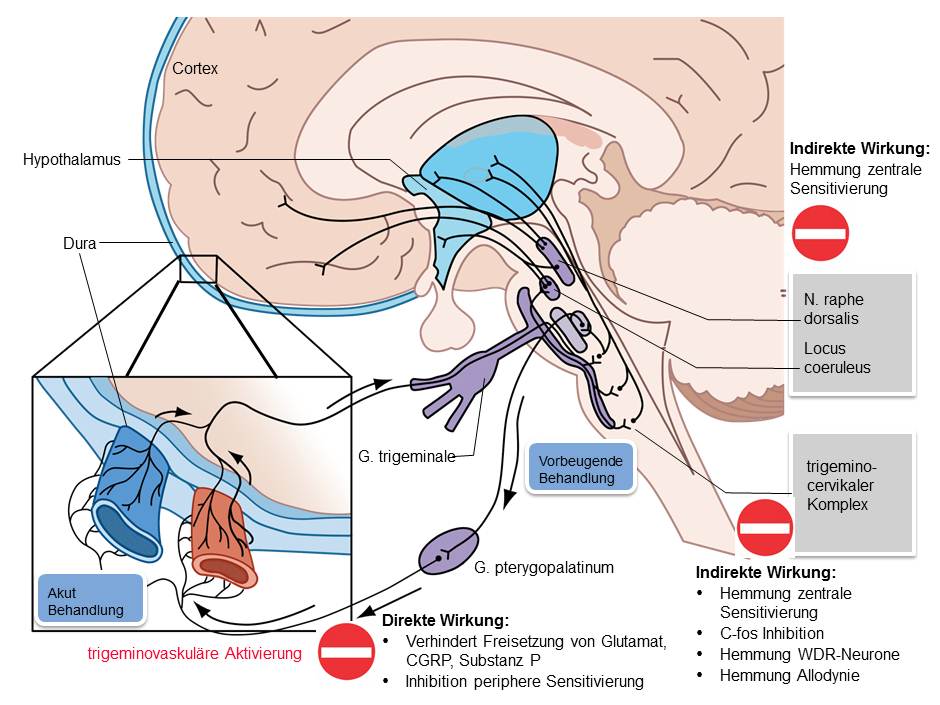
Mechanisms of action of botulinum toxin A (Botox) in the pathophysiology of migraine: Overview
The drug Botox® (botulinum toxin type A) received approval from the German Federal Institute for Drugs and Medical Devices (BfArM) on September 23, 2011, for the relief of symptoms of chronic migraine in adults who have responded inadequately to or cannot tolerate prophylactic migraine treatments. The approval was granted based on the Mutual Recognition Procedure in 14 European countries.
More on the scientific and clinical background:
Prophylaxis of chronic migraine with botulinum toxin
Since the second edition of the International Classification of Headache Disorders (ICHD-II 2004), chronic migraine been listed in the chapter on "Migraine Complications." While its prevalence is low compared to episodic migraine, the burden of suffering is considerable, as it affects all areas of life. Until now, no prophylactic medication specifically approved for chronic migraine has existed. There is only weak evidence that topiramate may be effective.
After case studies described the efficacy of botulinum toxin type A in migraine, initial attempts to demonstrate its effectiveness in the more common episodic migraine proved unsuccessful. Only through the PREEMPT clinical trial program with Botox® in the treatment of chronic migraine was it possible to demonstrate efficacy for this severely affected subpopulation. This provides, for the first time, an effective and well-tolerated treatment option for the prophylaxis of chronic migraine, which, however, must be integrated into a comprehensive therapeutic approach. Botox® was first approved in 2010 in England and the USA for the indication of "prevention of headaches in adults with chronic migraine (≥15 headache days, ≥8 migraine days per month)." On September 23, 2011, the German Federal Institute for Drugs and Medical Devices (BfArM) granted approval for the relief of symptoms of chronic migraine in adults who have responded inadequately to or are intolerant of prophylactic migraine treatments. This approval was granted based on the Mutual Recognition Procedure in 14 European countries. Treatment of chronic migraine (15 headache days per month, of which 8 must be clearly migraine days) with Botox is also covered by statutory health insurance.
Neuromodulation


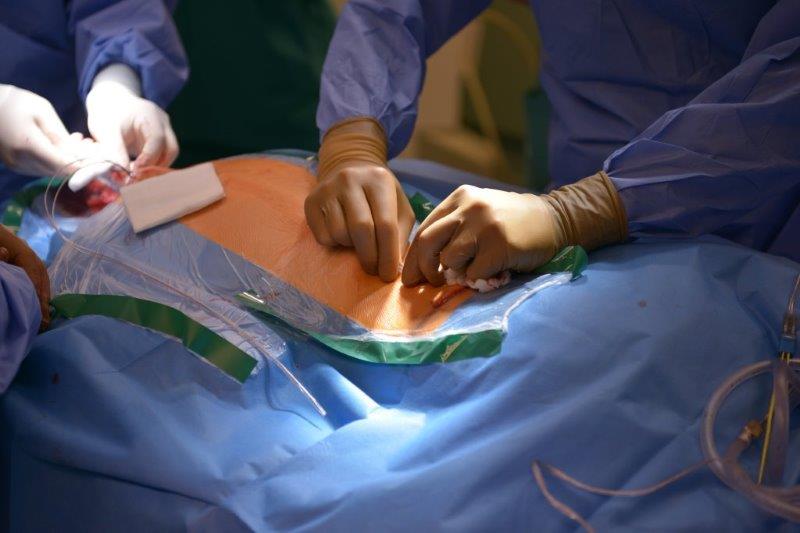


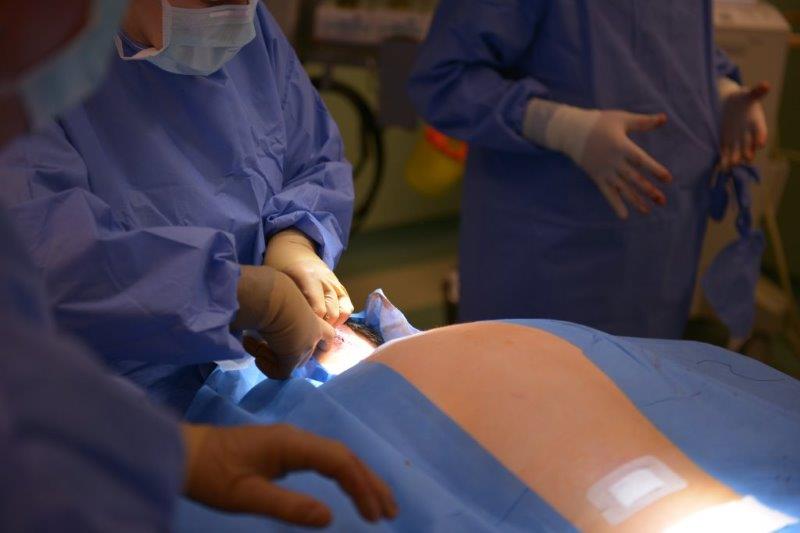
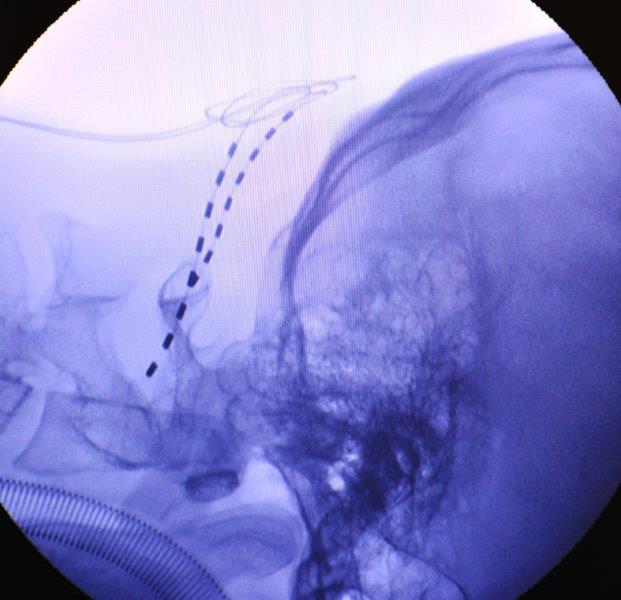
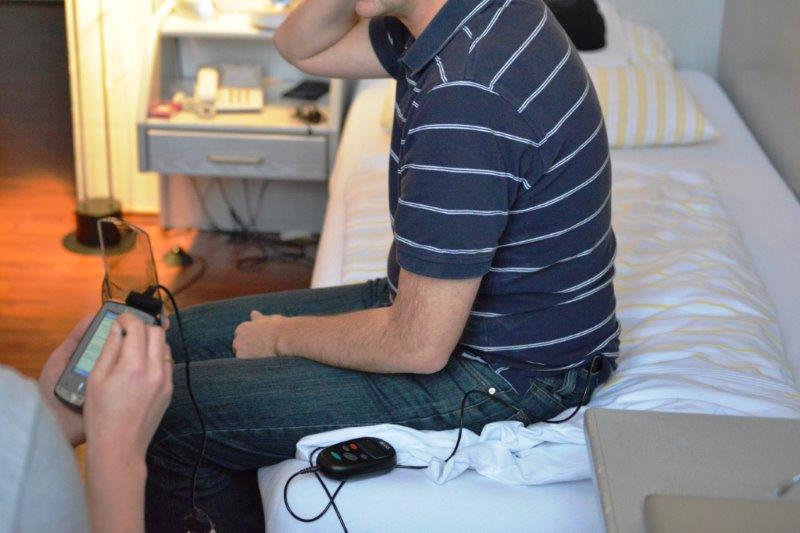

There are only a few effective treatment options for particularly severely affected patients with chronic migraines and other severe chronic pain. Standard therapy procedures are usually without lasting effectiveness. Recently, peripheral nerve stimulation (PNS) has come into focus as a treatment option. Peripheral nerve stimulation is a specific application of neuromodulation. This has been used to relieve chronic pain for several decades. Successful use is possible for headaches, back pain, neck pain, arm and leg pain. Due to the increasing progress of microelectronics, it is possible to implant a pacemaker-like device under the skin and thus enable continuous neuromodulation. The device is about the size of a matchbox. 
To treat chronic migraines, a special rechargeable system can be implanted, meaning there is no need to change the battery. The stimulator sends electrical signals to the occipital nerve (ON), located just under the skin of the neck. Due to this special location, the treatment option is also called occipital nerve stimulation (ONS). The mode of action of occipital nerve stimulation is explained by changes in electrical regulation in the brainstem. The pattern of pain signals is modulated and masked by continuous stimulation. The constant hypersensitivity in the nervous system is balanced and reduced. The function of the neurostimulator system and the peripheral nerve stimulation can be compared to that of the pacemaker. It is assumed that neuromodulation activates and stabilizes the body's own defenses against pain, thus naturally reducing sensitivity to pain signals. The individual steps of implanting the system are described below.
For the decision to undergo neuromodulation, the patient must be cared for in a specialized migraine and headache center. The specialized indication and further professional care must be guaranteed. In our center, in collaboration with the neurosurgery clinics of the University Hospital Schleswig-Holstein, the process described below has proven successful.
The assessment of suitability and information regarding treatment options are provided at the Migraine and Headache Center of the Kiel Pain Clinic. We then arrange an outpatient appointment at the Neurosurgery Clinic for surgical and anesthesia planning. Due to our nationwide headache treatment network, care can also be provided at another cooperating and certified neurosurgical center if necessary. Further information can be found here .
Medications ineffective
Many substances are repeatedly discussed in the media and in specialist literature regarding their preventive effectiveness in migraine therapy. For a number of these substances, there are reports that make their effectiveness unlikely. Therefore, if someone recommends any of the following substances to you for migraine prevention, you should ask for more detailed information. These include, in particular, the following active ingredients:
- Bromocriptine (used, for example, to suppress lactation)
- Carbamazepine (e.g., for epilepsy)
- Cimeditin (e.g., for stomach ulcers)
- Clonidine (for elevated intraocular pressure)
- Diphenylhydandoin (e.g., for epilepsy)
- Diuretics (water pills, various uses)
- Progestins (e.g. for menstrual irregularities)
- Hypotensive drugs (medications to raise blood pressure)
- Indomethacin (e.g., for inflammatory rheumatic diseases)
- Lithium (mental illnesses)
- Neuroleptics (e.g., for depression)
- Nifedipine and nimodipine (heart problems)
- Nootropics (substances to improve cerebral blood flow)
- Proxibarbal (e.g. for sleep disorders)
- Reserpine (e.g., for blood pressure)